Parapets
Cracked Coping Joints
Open joints in old parapet caps let water behind the wall flashing of a row building.
As a Newport commercial roofing contractor, we replace and repair roofs on storefronts, churches, and riverfront buildings, including those in the city’s historic districts.
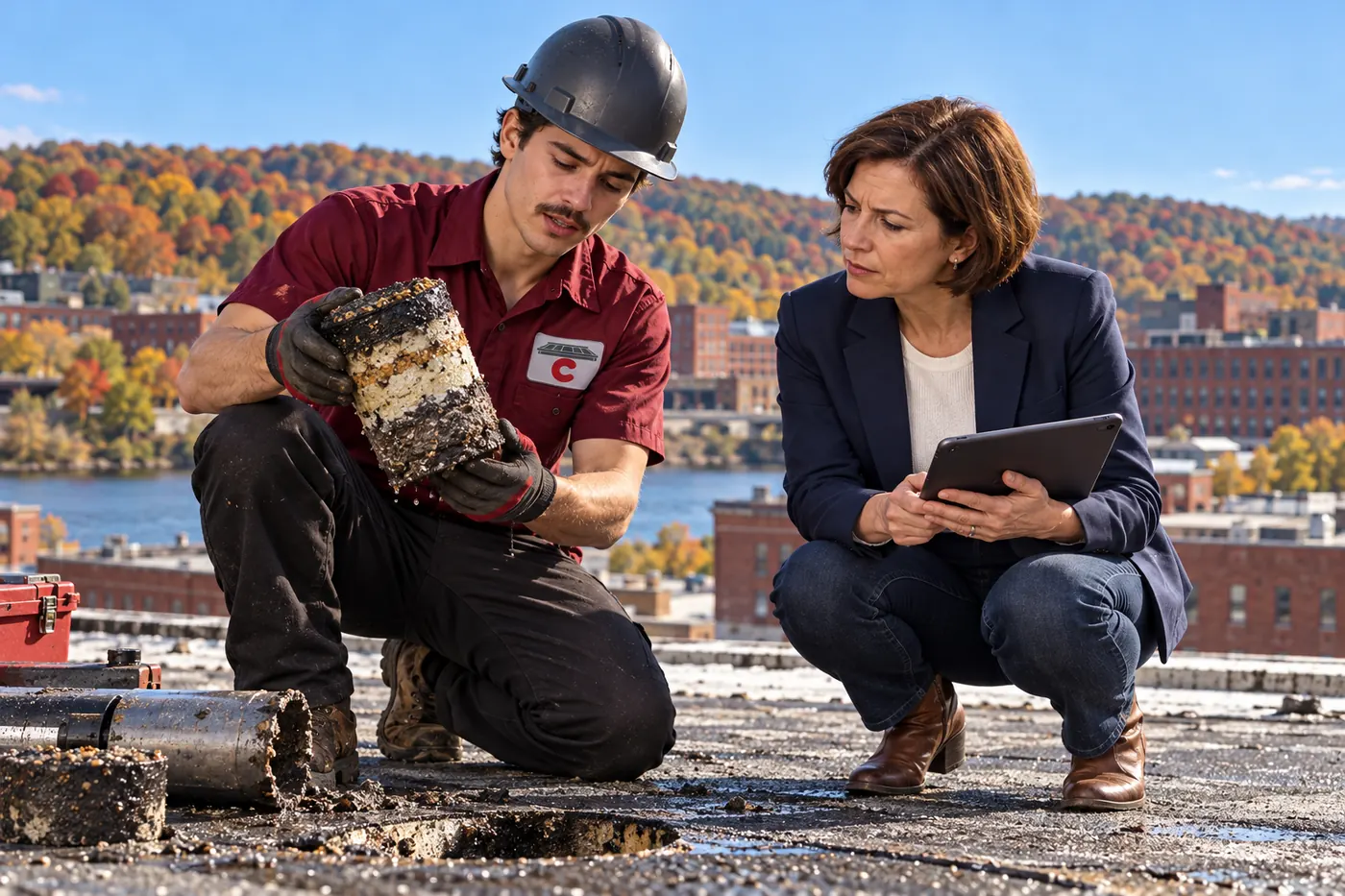
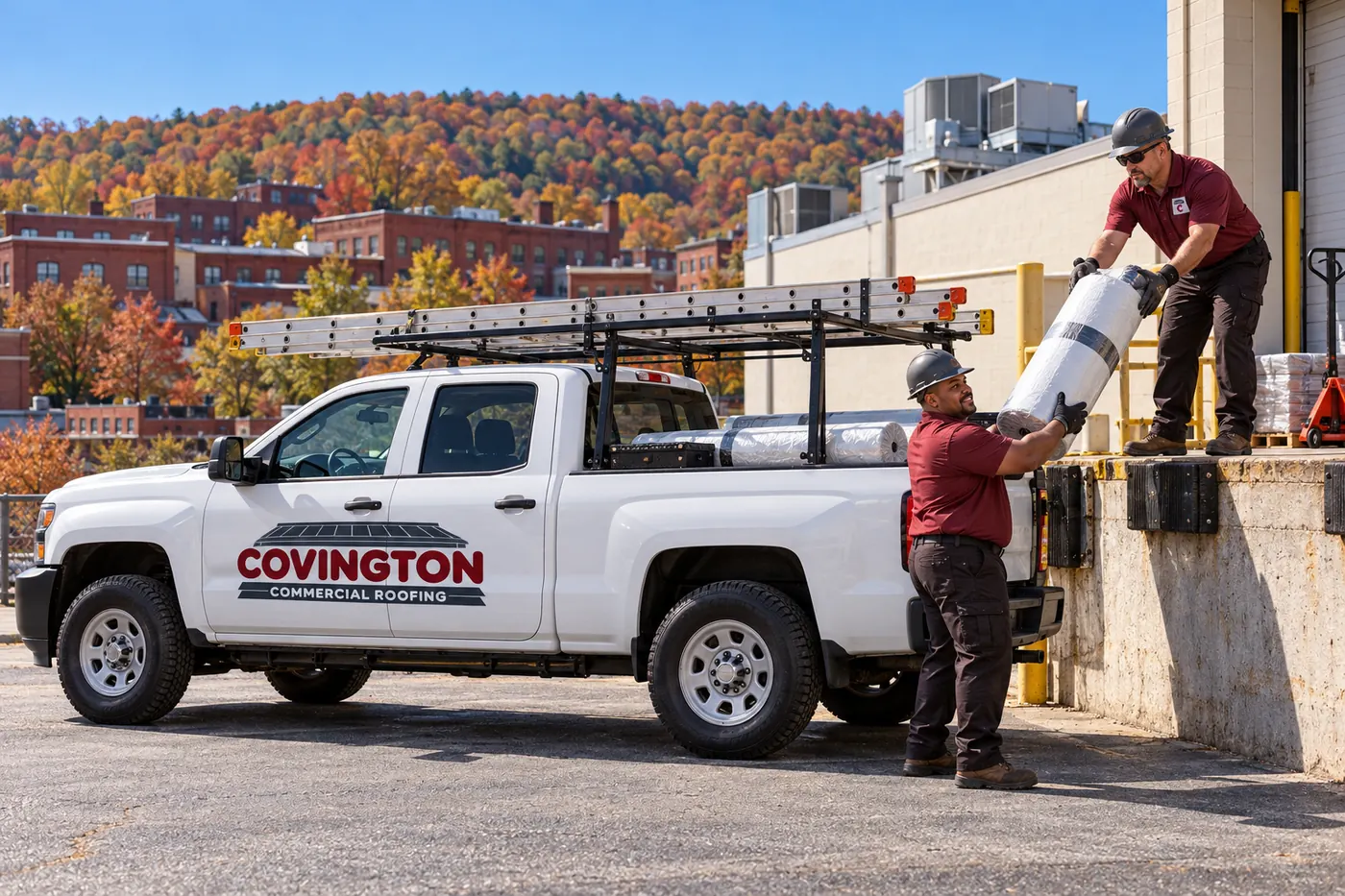
Working as a Newport commercial roofing contractor means planning around design review. Newport reviews visible roof work in the East Row and York Street local districts, on individual landmarks, and on Buena Vista district roofs that face a street.
Low-slope roofs behind parapets mostly touch the review through coping caps and edge metal seen from the sidewalk. Pitched metal roofs raise more questions about seam spacing, panel profile, and color.
Older masonry blocks and church roofs near the river show these problems most.
Open joints in old parapet caps let water behind the wall flashing of a row building.
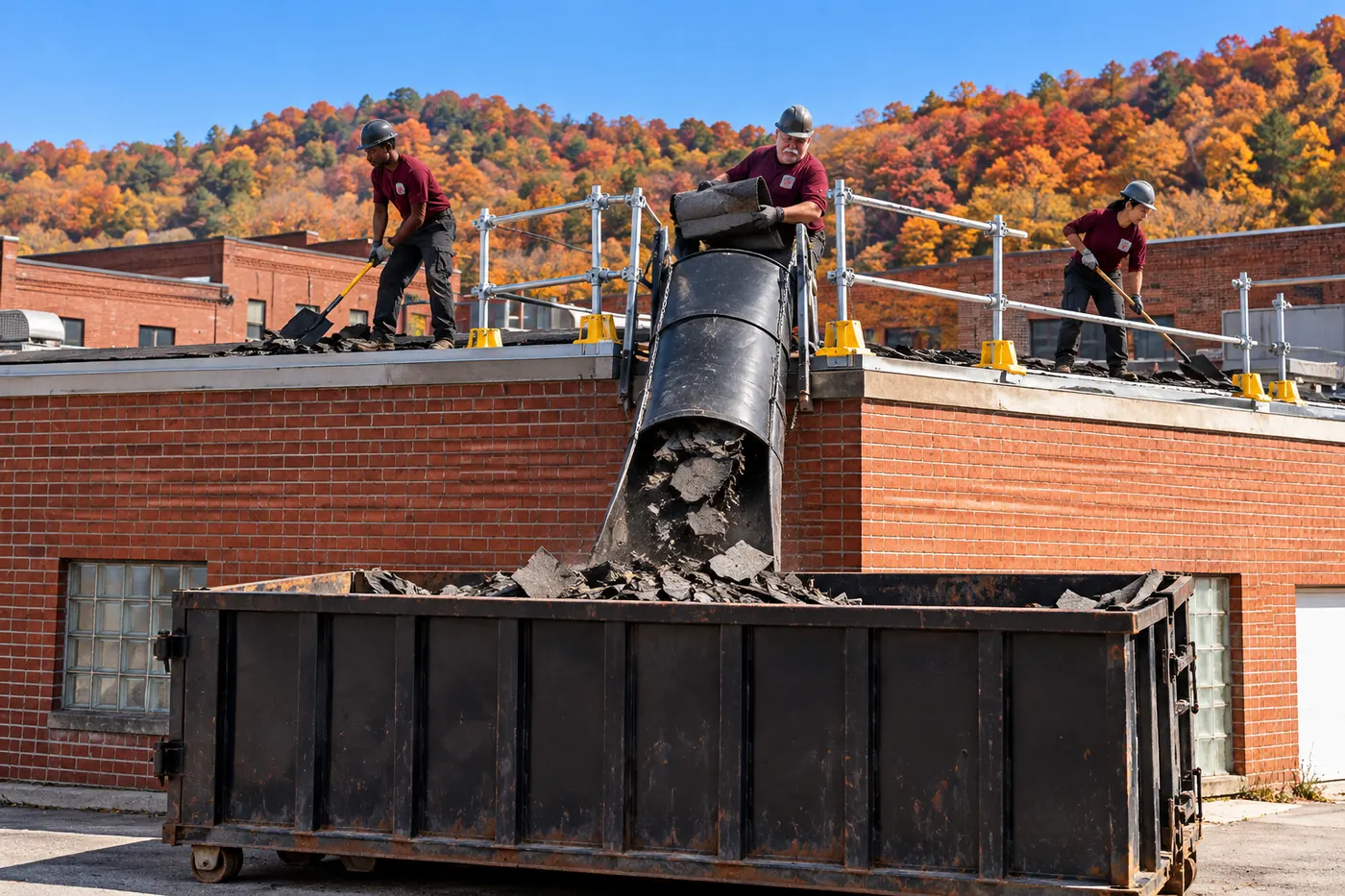
Decades-old built-up roofs on downtown blocks blister where moisture sits between felts.
Front gutters and downspouts rust out, and replacing them counts as visible work in a district.
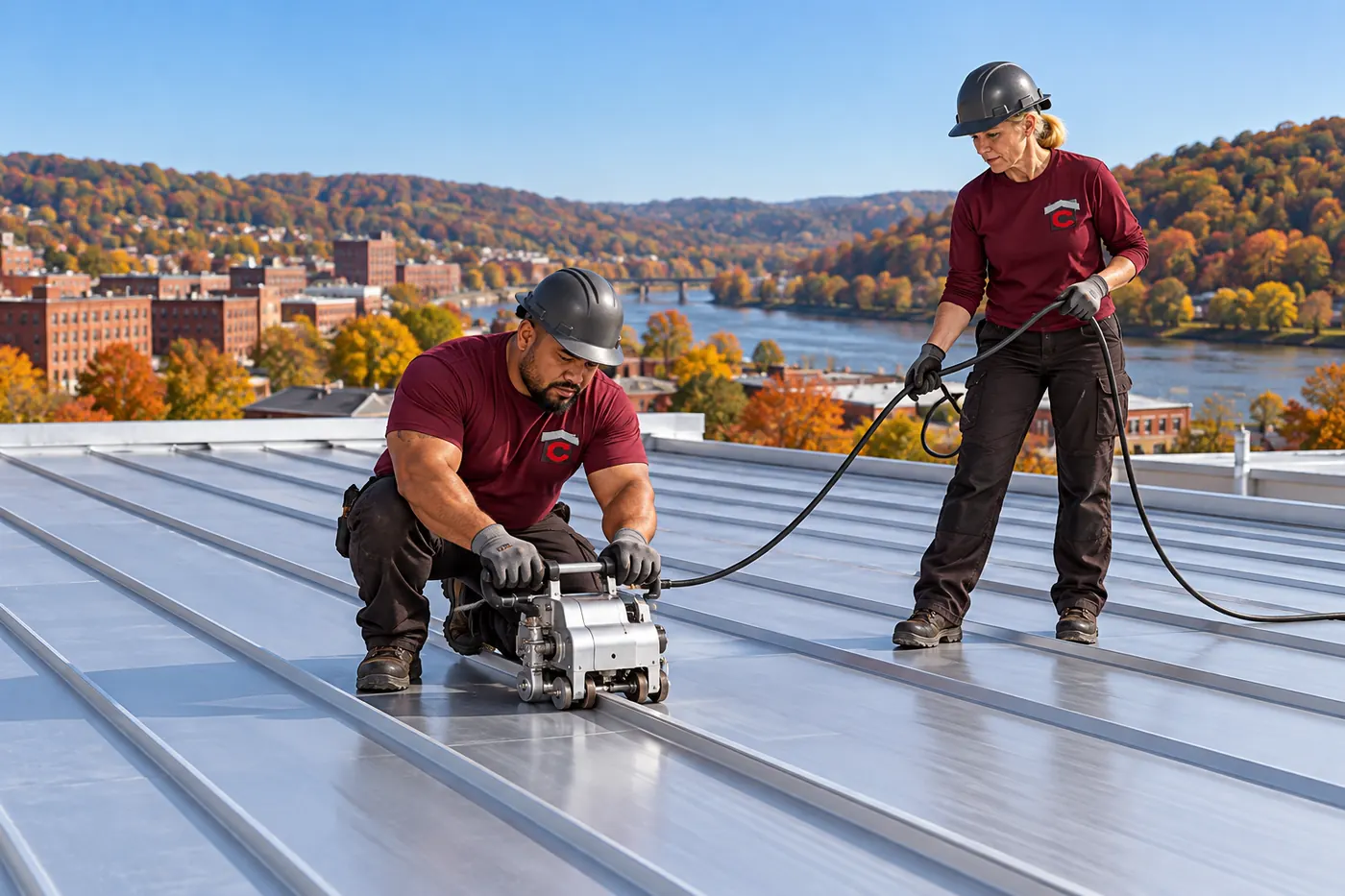
Steep metal roofs on churches lose paint and loosen at ridge caps after years of weather.
Cracked domes on downtown blocks leak at the curb and let daylight through stained frames.
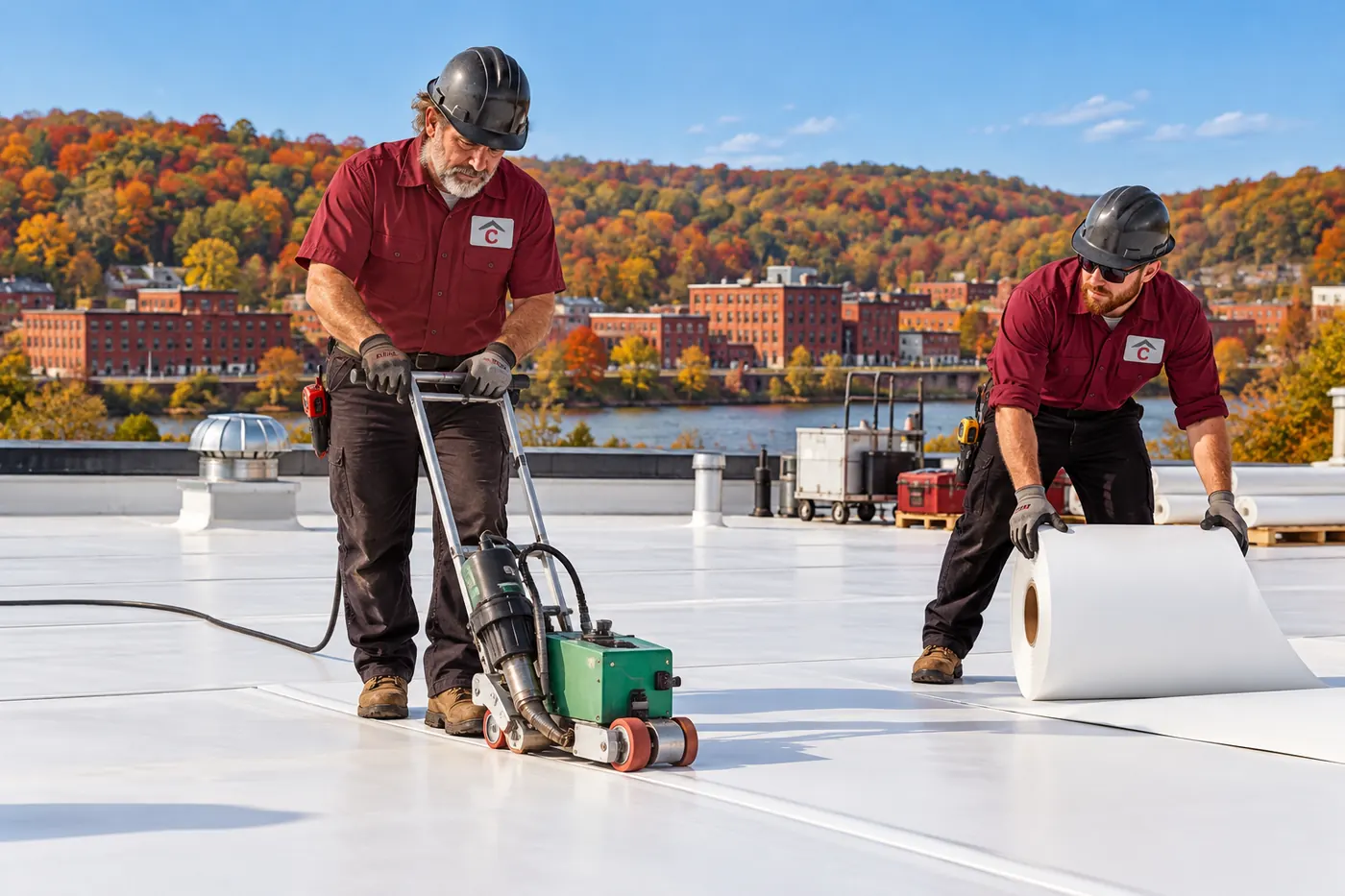
Newport owners get these gains when a worn roof is replaced the right way.
Coping caps and edge metal get chosen with the district guidelines in hand before anything is ordered.
Street-side gutters and leaders get replaced together, so water leaves the building where it should.
Tearing off stacked built-up layers shows the deck before the new membrane covers it again.
Older blocks gain insulation at the code level during replacement, under a membrane hidden by the parapet.
Each system below fits a common Newport building type.
White welded membrane for flat roofs hidden behind storefront parapets. Welded laps stay out of sight from the sidewalk.
TPO Roofing →Seam spacing and color picked with the preservation guidelines for visible slopes. Color samples go with the review application.
Metal Roofing →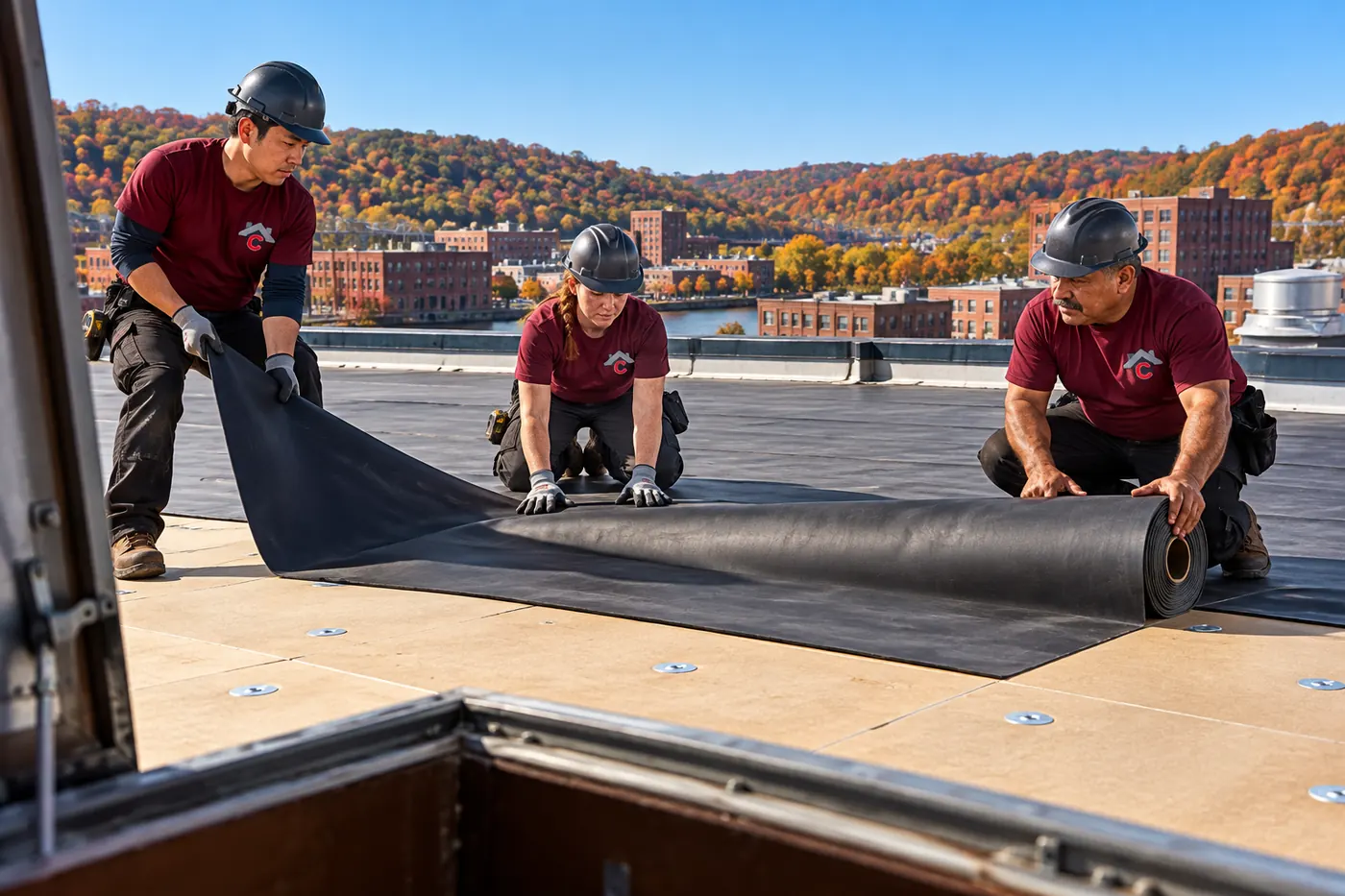
Rubber sheets for stepped rear additions with many walls and offsets. Rubber forms around the many steps on older rear wings.
EPDM Roofing →Leaks at a curb or lap get fixed so the building stays dry during approval. Patches match the existing membrane so nothing visible changes.
Roof Repair →Call us with the address. We can stop the leak and line up the design review steps for the full roof.
Historic work adds a review step before anything visible changes.
We walk the roof, photograph every visible edge and slope from the street, and check the deck from inside. Street photos become part of the review application.
The address gets matched to the East Row, York Street, or Buena Vista districts, or to a landmark listing. Landmark listings follow the same review path.
Coping, edge metal, gutter, and panel choices are written up for the Certificate of Appropriateness. Product data sheets go in with each choice.
After approval, the City of Newport building inspector issues the permit for the roof work. The permit covers the roof and its visible edges.
Crews tear off, set insulation and membrane or panels, and finish edges to the approved details. Each edge is finished to the approved detail before inspection.
Beyond Newport, we take commercial roofing work in Covington and these towns.
Elsewhere near Newport? Call us or send us a message.
Covington neighborhood shops and retail roofs.
Latonia Commercial Roofing →Hillside lots beside I-71/75.
Fort Wright Commercial Roofing →Industrial lots along the Licking River.
Wilder Commercial Roofing →Dixie Highway shops under wooded slopes.
Park Hills Commercial Roofing →Large retail and office roofs uphill.
Southgate Commercial Roofing →Equipment-heavy office and institutional roofs.
Highland Heights Commercial Roofing →Riverside buildings west of Covington.
Ludlow Commercial Roofing →Retail roofs on the US 27 corridor.
Cold Spring Commercial Roofing →Hilltop buildings in steady wind.
Fort Thomas Commercial Roofing →Attached storefronts with party walls.
Bellevue Commercial Roofing →Low Ohio River lots, Kentucky code.
Dayton Commercial Roofing →Visible roof work in the East Row and York Street districts, on landmarks, and on street-facing Buena Vista roofs goes through a Certificate of Appropriateness. Flat roofs behind parapets mostly involve coping and edge metal; pitched metal roofs raise questions about seam spacing, profile, and color.
Newport has its own building inspector, so building permits come from the city instead of the Campbell County office that handles nearby towns. Projects beyond the preservation officer’s approval go to the Historic Preservation Commission first.
The membrane itself rarely shows from the street, but new parapet caps and visible edge metal change the facade and can bring the project under review. Ask the preservation officer early, before edge metal is ordered.
Yes, and it usually makes sense. Gutters and downspouts facing the street count as visible work in a district, so they belong in the same application as the roof to keep the project on one approval.
Church roofs here mix steep metal or slate-look slopes with flat roofs over additions. Each part gets inspected on its own, and the visible slopes get extra attention in the historic review.
Leak repairs that keep the building dry can usually go ahead while the application is reviewed, as long as nothing visible changes. Replacement work that touches coping, edge metal, gutters, or pitched panels waits for the approval and the city building permit.
Send the address and a street photo, and we will plan the roof and the review together.