If Your Roof
Has Parapets, Offsets, and Odd Corners
Stretchy sheets wrap around inside and outside corners, so irregular roofs flash with fewer pieces.
Start WithEPDM Roofing
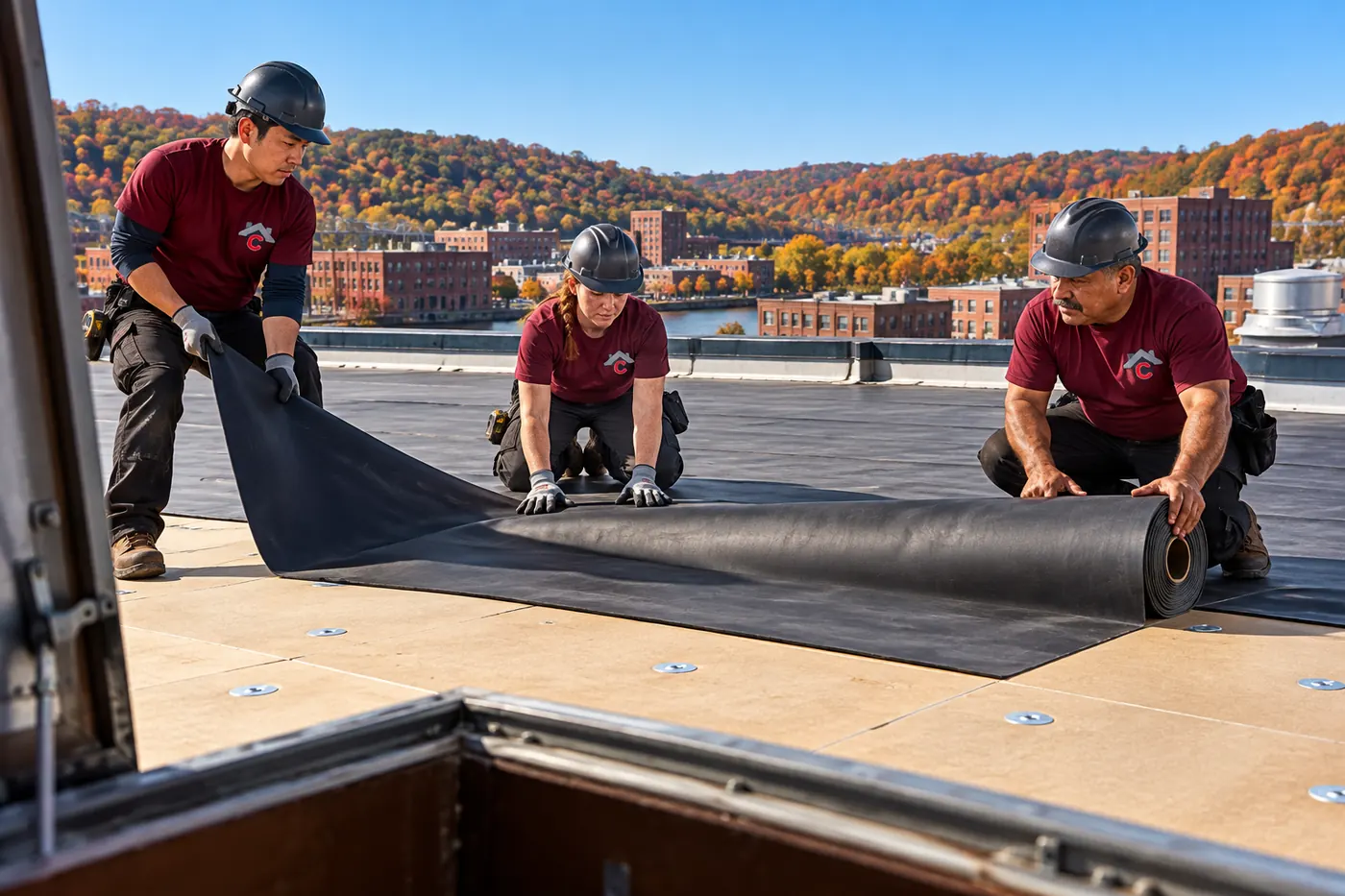
We install EPDM as a Covington EPDM roofing contractor, laying wide rubber sheets with primed, taped seams on low-slope shops, storage buildings, and older flat roofs.
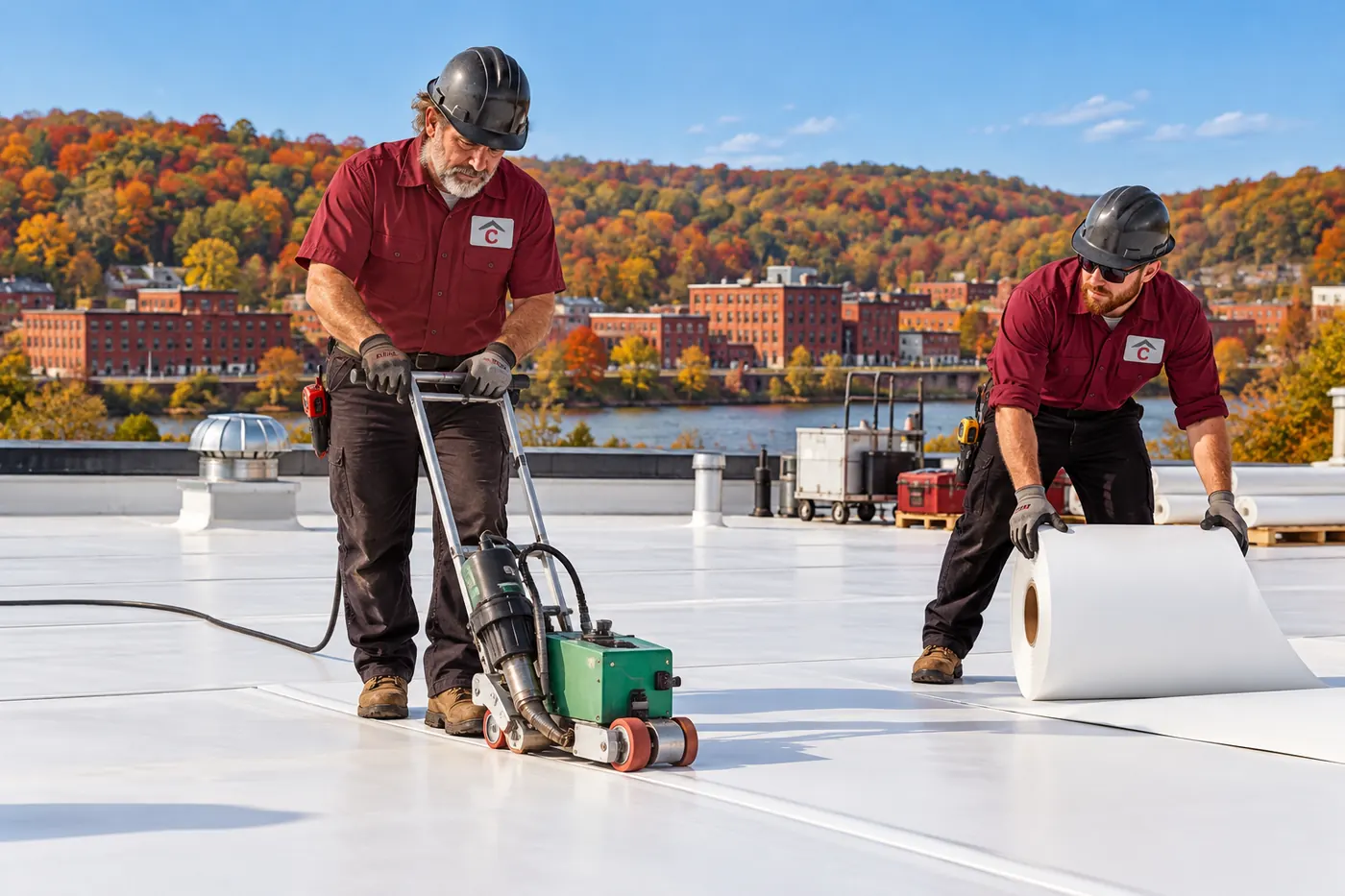
A Covington EPDM roofing contractor weighs flexibility and wide sheets against the reflectivity of a white roof before picking rubber.
Stretchy sheets wrap around inside and outside corners, so irregular roofs flash with fewer pieces.
A black sheet absorbs sun, which matters little over unheated storage or space with light summer cooling.
Keeping one membrane type across the joint makes the tie-in simpler to seal.
Under air-conditioned space, a reflective TPO sheet usually earns its keep in lower summer loads.
Older rubber roofs in Northern Kentucky tend to fail at the same handful of details.
Tape laid over a lap that was poorly cleaned or primed lets go, and the seam edge lifts in cold snaps.
Loose bars along the top of wall flashing let water run down behind the rubber.
River stone and silt slide into strainers and leader pipes, and water backs up on the sheet.
Coping joints that open up send water behind the flashing, under the field sheet.
Aged rubber pulls tight across inside corners and lifts off the wall, leaving a void behind the flashing.
Strips over fastener rows on mechanically attached sheets peel at their ends and expose plates to water.
EPDM goes on three ways, and the structure decides which ones are on the table.
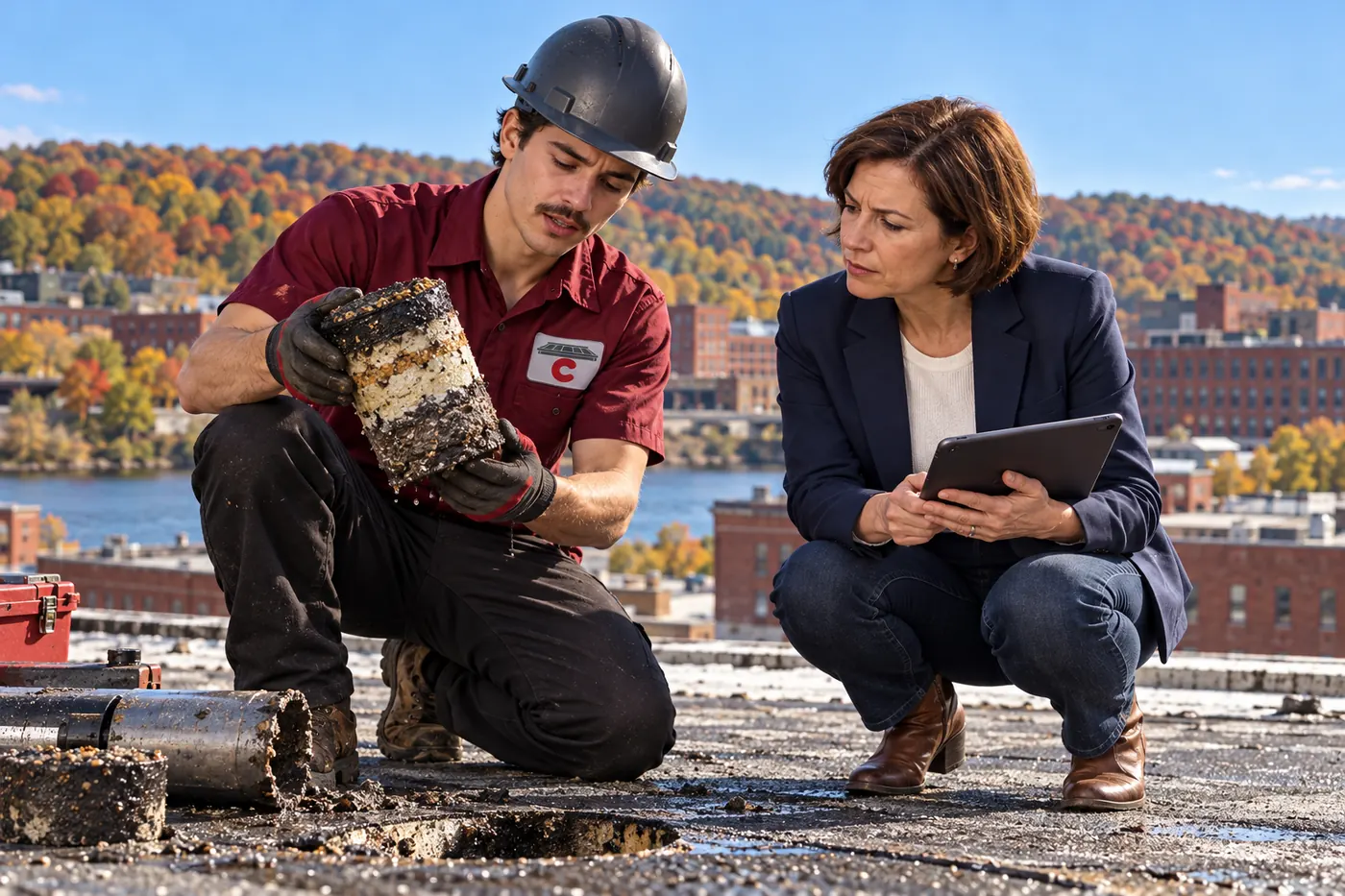
Bonding adhesive holds the whole sheet, the surface stays visible for leak tracing, and edges get standard metal.
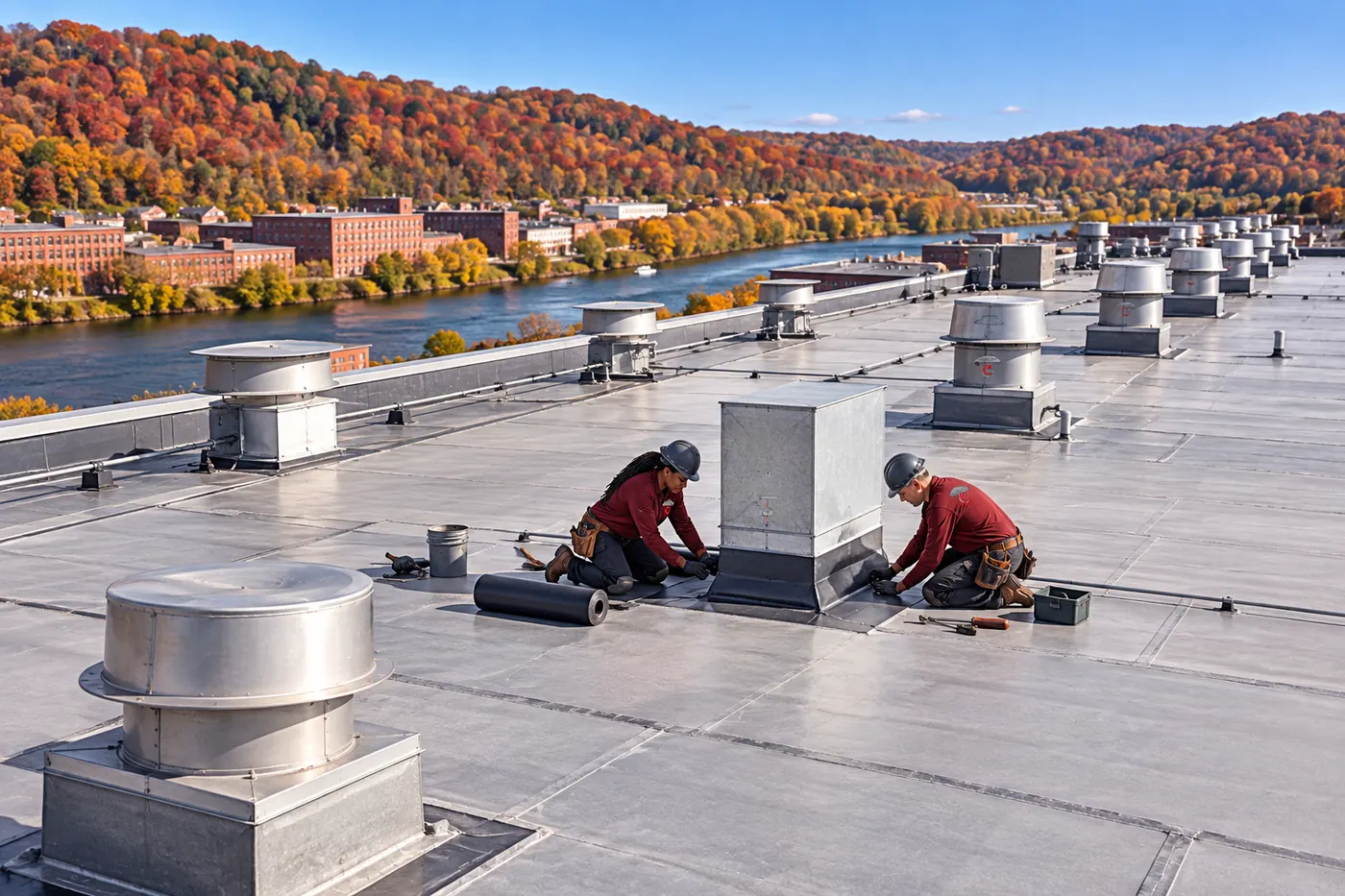
Loose rubber held by river stone or pavers, for decks and framing confirmed to carry the weight.
Fastener rows covered by cover strips hold the sheet on steel or wood decks.
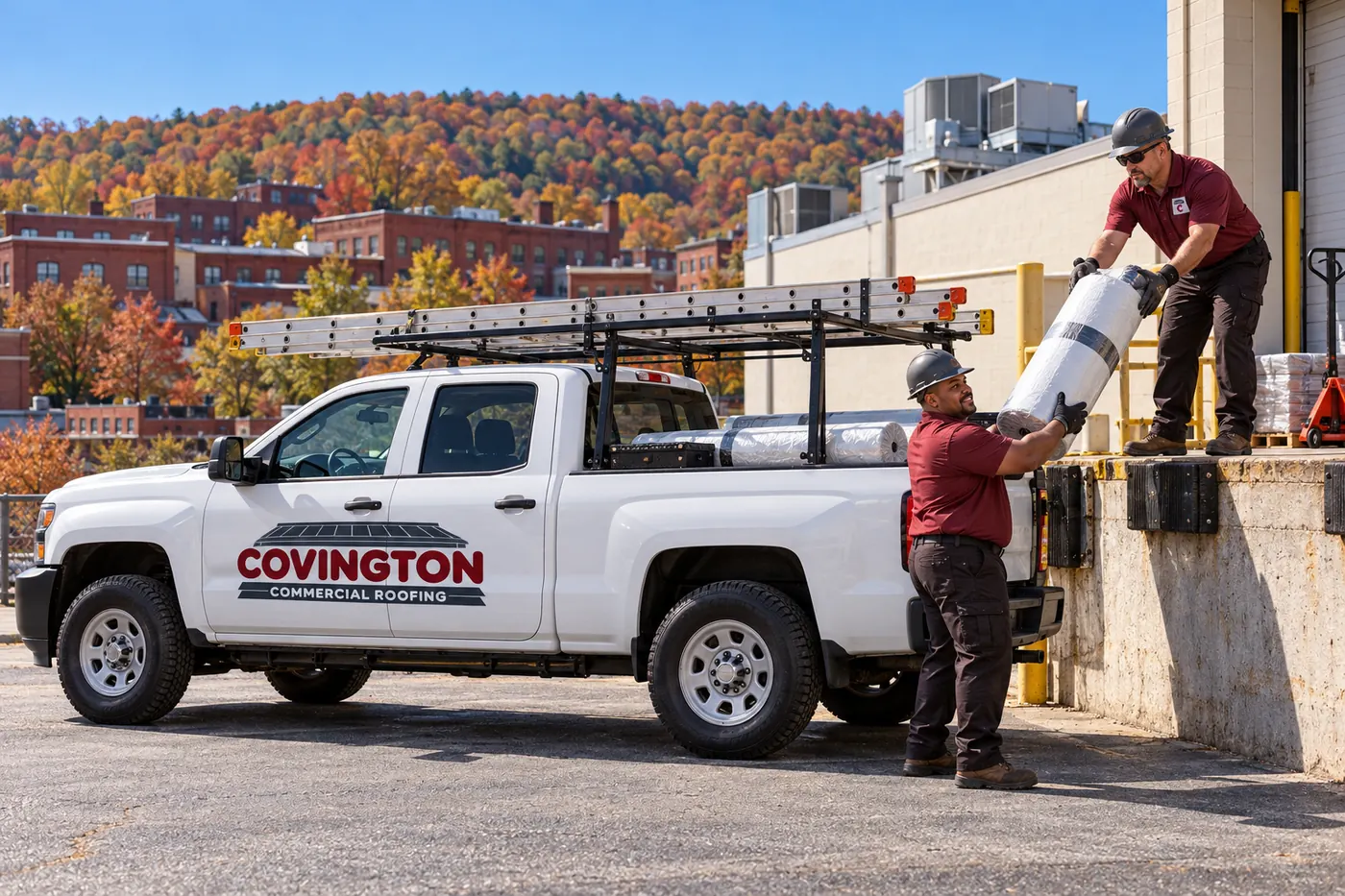
Rubber holds up on Covington roofs that move, flex, and see hard winters.
The rubber stays pliable on freezing nights, so seams and corners move with the building.
Wide rolls cover large areas with fewer seams to tape and maintain.
Punctures and open laps patch with primer and tape, using parts any crew carries.
Where stone is used, it blocks sunlight and hail from the rubber surface.
Call us or ask for an estimate with the roof size. We will check the laps, bars, and coping before talking replacement.
EPDM work depends on clean, dry, primed surfaces, so the order rarely changes.
We check for wet insulation, measure parapet heights, and confirm whether the deck can carry ballast.
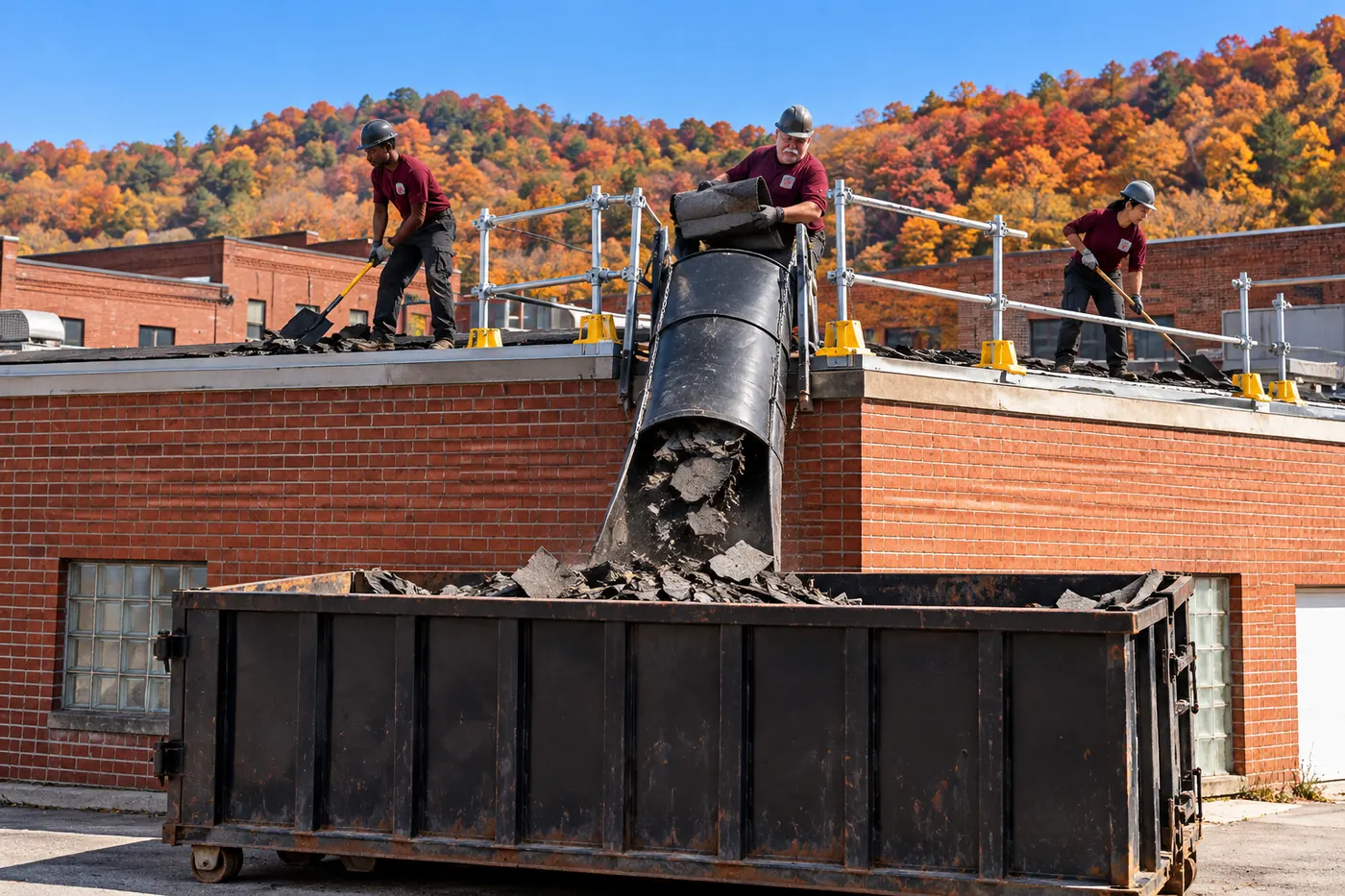
New insulation and cover board go down, with tapered layers where water ponds.
Wide rubber sheets are unrolled and left to relax before adhesive or fasteners go in.
Each lap is scrubbed and primed on both surfaces, then tape is laid and rolled with a silicone roller.
Termination bars, coping caps, and scupper boxes finish the walls, and seam ends get lap sealant.
These sit next to EPDM on many Covington buildings.
Welded white membrane for roofs over cooled space, often the pick for offices and retail sharing a building with an older rubber section.
See TPO Roofing →Recover or tear-off planning for any low-slope roof, with tapered insulation added where water sits after rain.
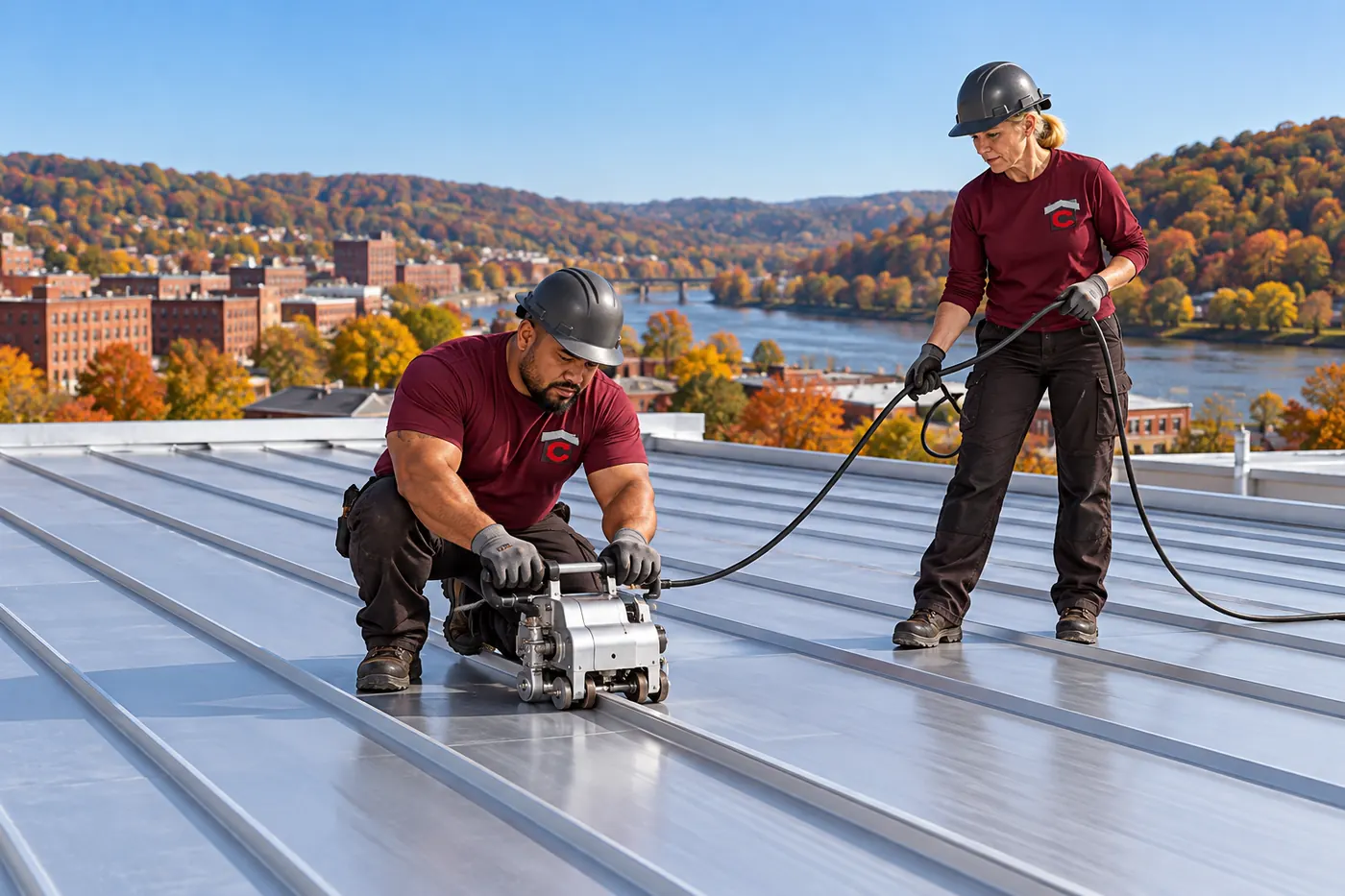
See Flat Roofing →Standing seam and R-panel roofs, including retrofit framing that turns a ponding flat roof into a sloped panel roof.
See Commercial Metal Roofing →EPDM goes down as large synthetic rubber sheets, usually black, with laps cleaned, primed, taped, and rolled. Corners, pipes, and curbs get uncured rubber flashing that stretches to shape. White-on-black sheets exist for buildings that want a reflective surface.
Rubber makes more sense on irregular roofs with many parapets, on ballasted roofs where stone already shields the sheet, on buildings heated more than cooled, and on additions tied into an existing EPDM roof. Where cooled offices or retail sit below, TPO wins more often.
Cleaning and priming decide how long a lap holds. The installer scrubs the lap, primes both faces, lays the tape, and rolls it to press out air. Corners get uncured rubber, pipes get molded boots with clamps, and seam ends at curbs or edges get lap sealant.
Stone or pavers hold a loose sheet down by weight and shield it from sun and hail. An engineer or the original drawings should confirm the deck and framing carry the load first, and drains need clear strainers so stone and silt stay out of the leader pipes.
At the parapet, the sheet runs up the inside of the wall and is fastened along a termination bar, then covered by counterflashing or a metal coping cap with sealed or splice-plated joints. Open edges get gravel stop or drip edge stripped in with flashing tape.
White-on-black EPDM gives a reflective surface while keeping rubber’s flexibility. It earns its cost over cooled space where TPO would otherwise be the pick, and black sheet stays the simpler choice over storage and heated shops.
Punctures from dropped tools or hail get a patch of cured rubber with seam tape: the area is scrubbed, primed, covered, and rolled. Patches at least a few inches past the hole on every side give the tape enough bond to hold through freeze and thaw.
Tell us the roof size and how the building is used, and we will walk the roof with you.