Curbs
Curbs Sitting Too Low
Curbs that clear the old roof sit too low once new insulation goes on.

As a Highland Heights commercial roofing contractor, we replace office, retail, and institutional roofs crowded with rooftop units, with the county as the single permit stop.
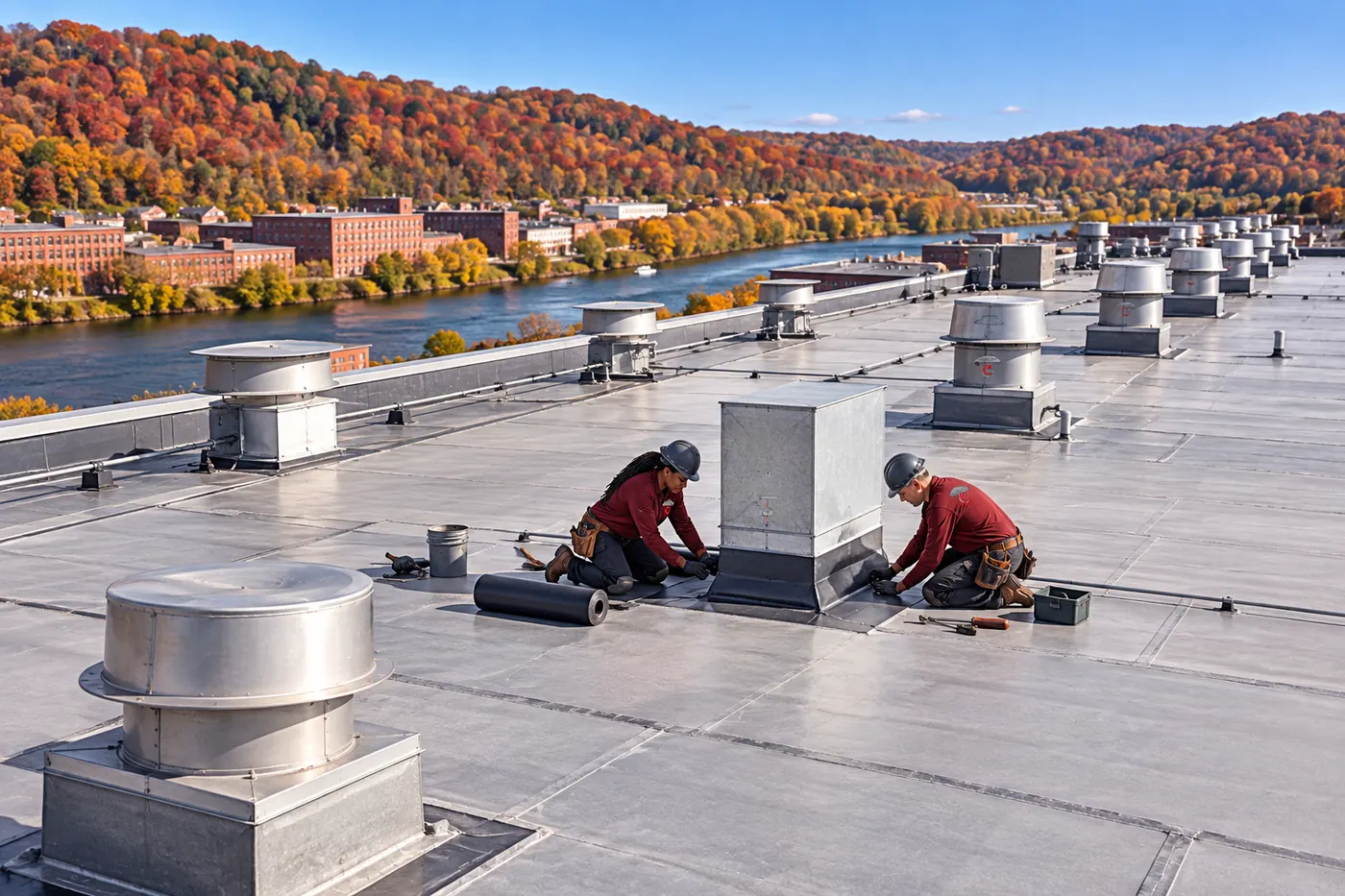
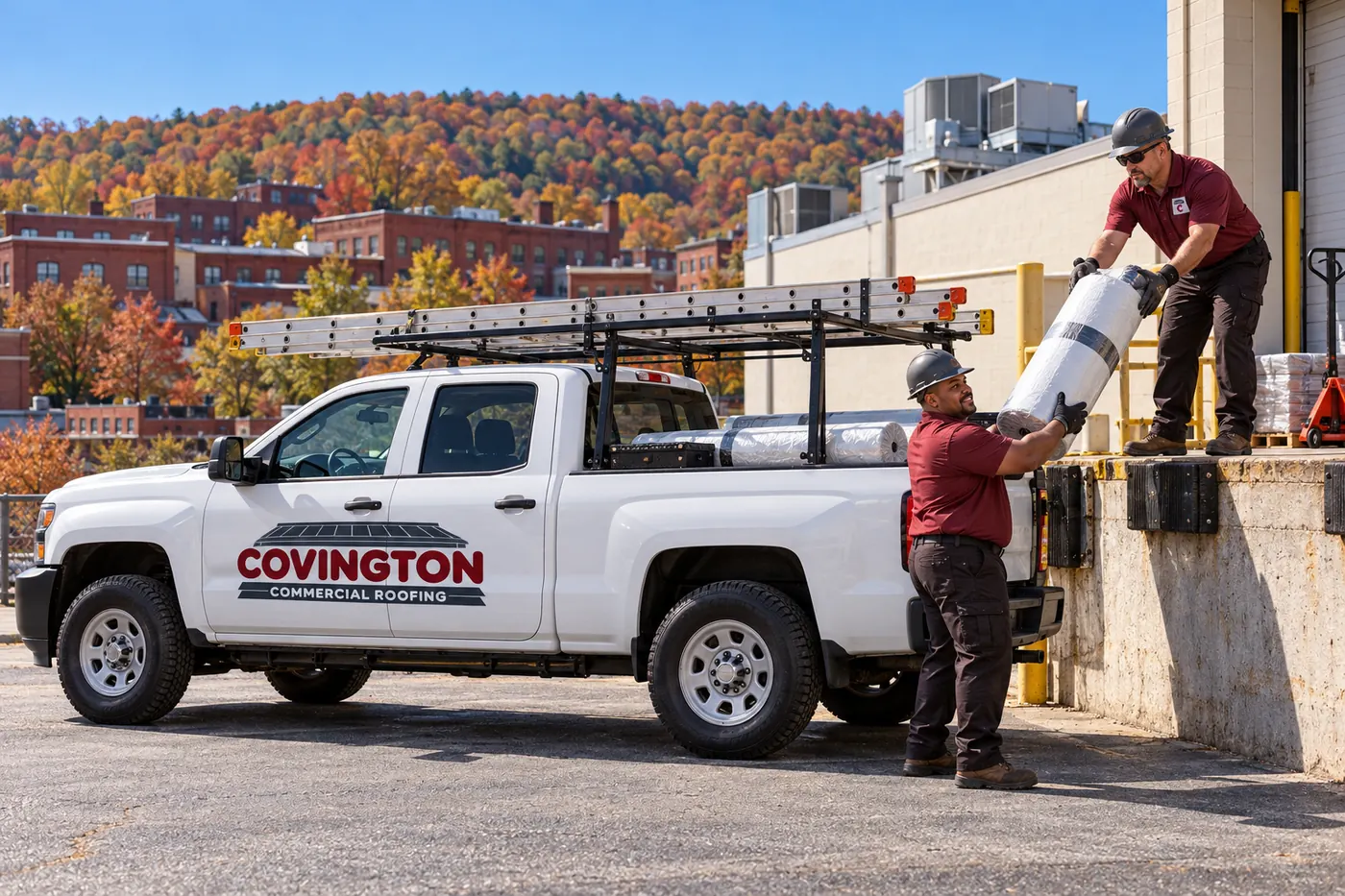
A Highland Heights commercial roofing contractor works with one permit office: the Campbell County building inspection office, which the state sheet names as the city’s only stop.
Highland Heights is home to Northern Kentucky University, and many office, retail, and institutional roofs nearby carry heavy rooftop equipment. On those roofs, replacement focuses on curbs, condensate, and service paths.
Roofs with many units wear out around them first.
Curbs that clear the old roof sit too low once new insulation goes on.
Condensate dumped on the membrane leaves algae and standing water.
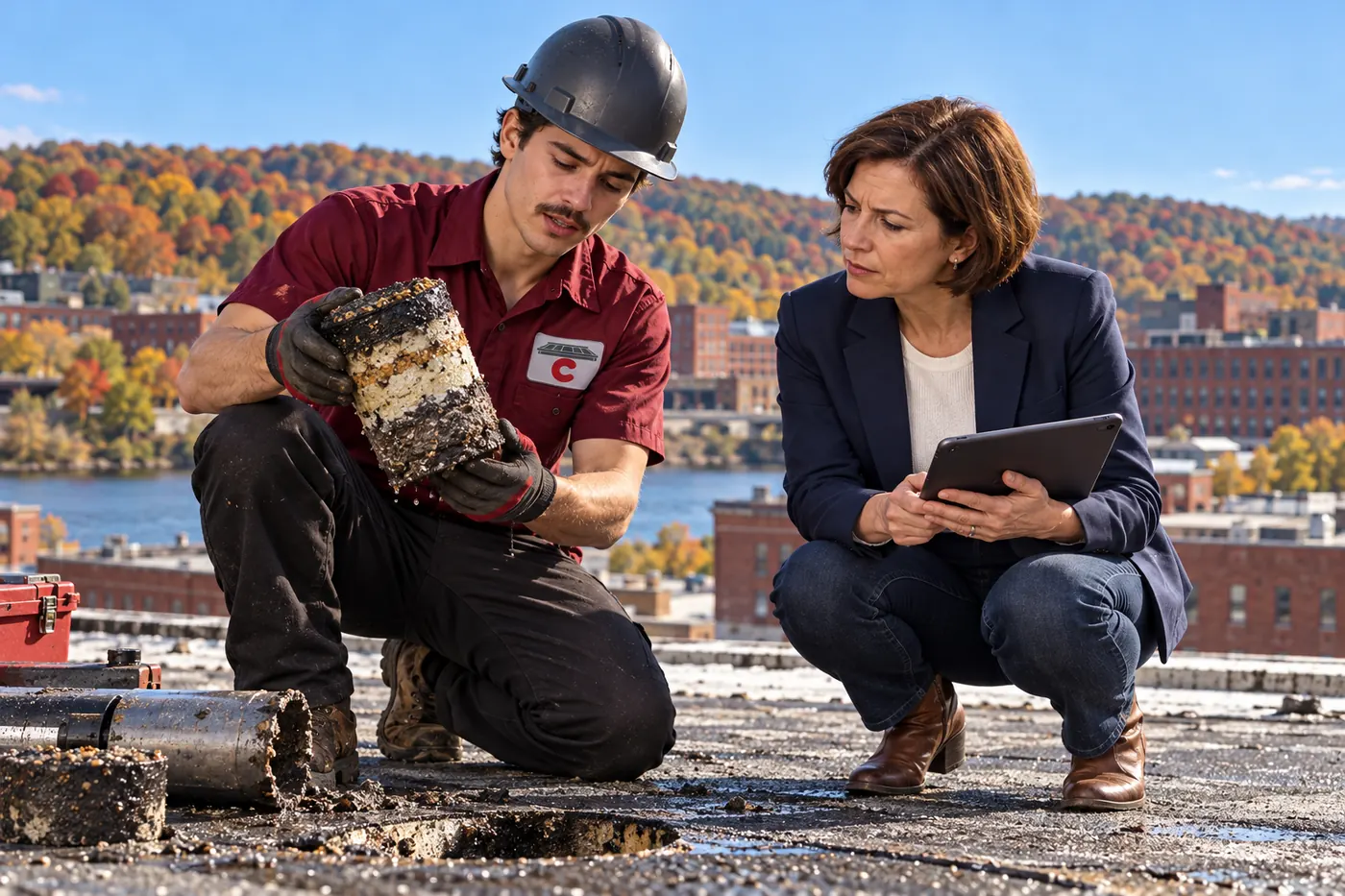
Technicians wear paths through the sheet between hatch and units.
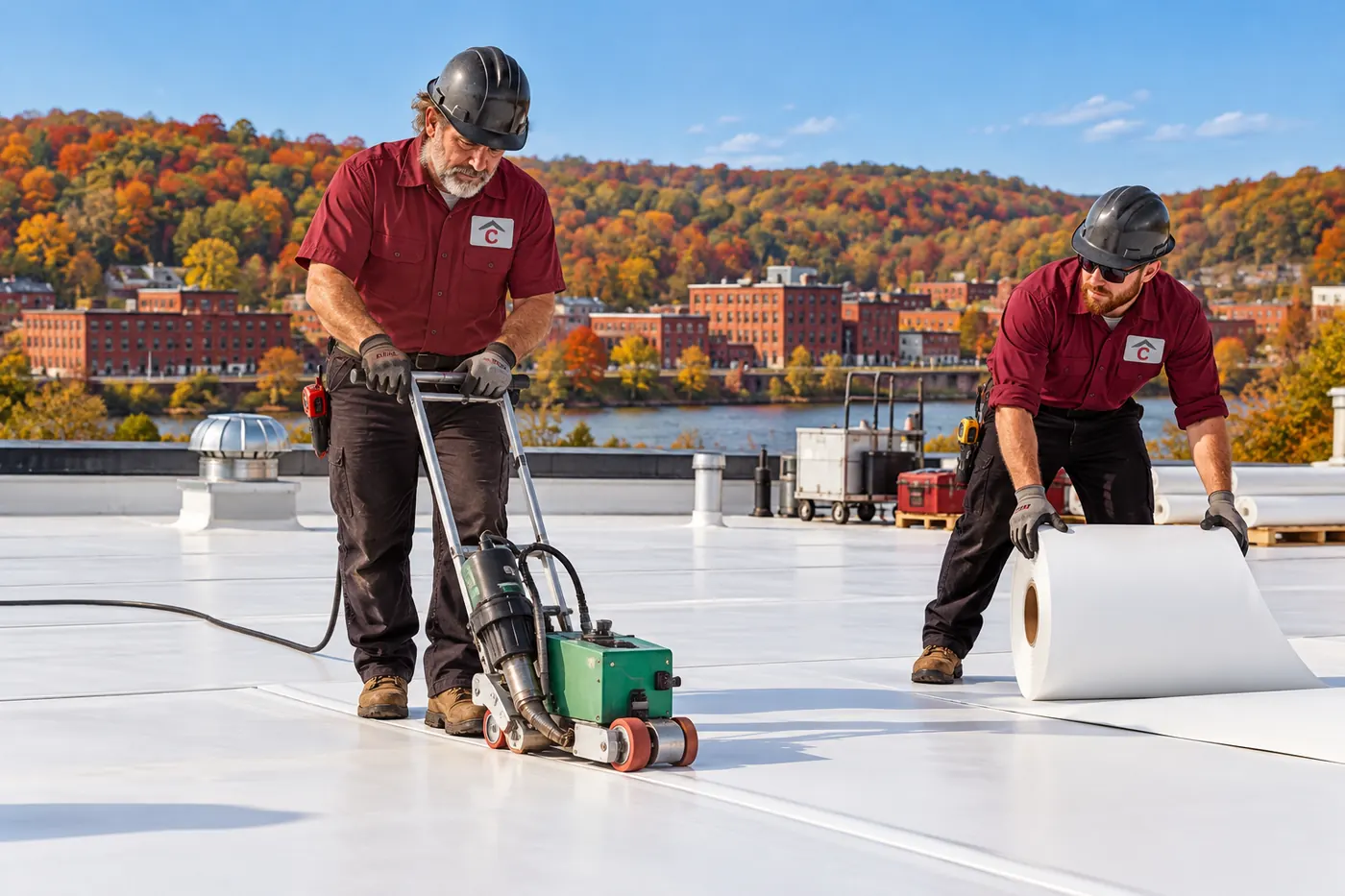
Dead curbs and vents left from old equipment keep leaking.
Busy hatches used by technicians wear their curb flashing and let water in beside the ladder.
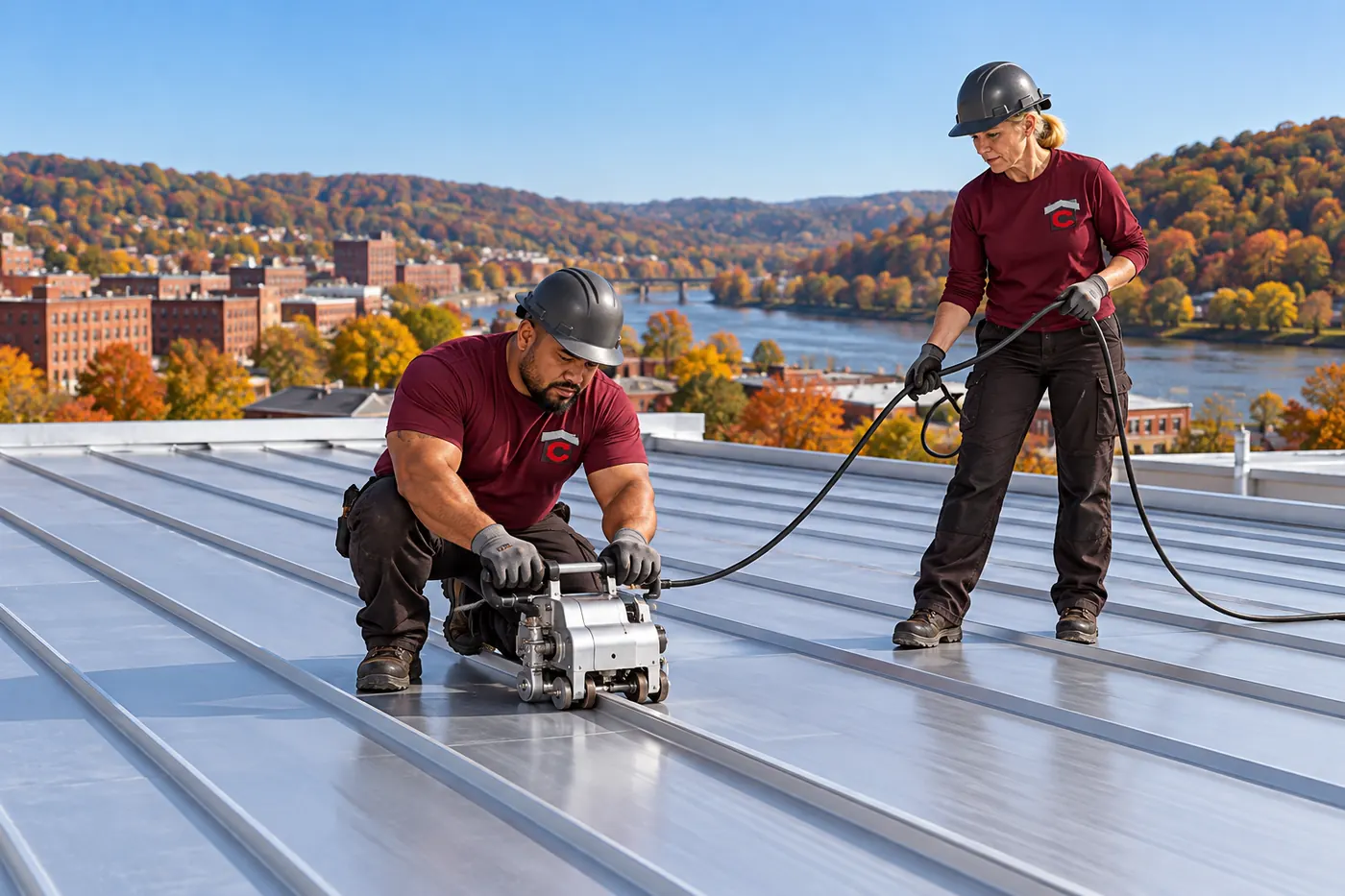
Office buildings with long parapets show open coping joints along the windward side.
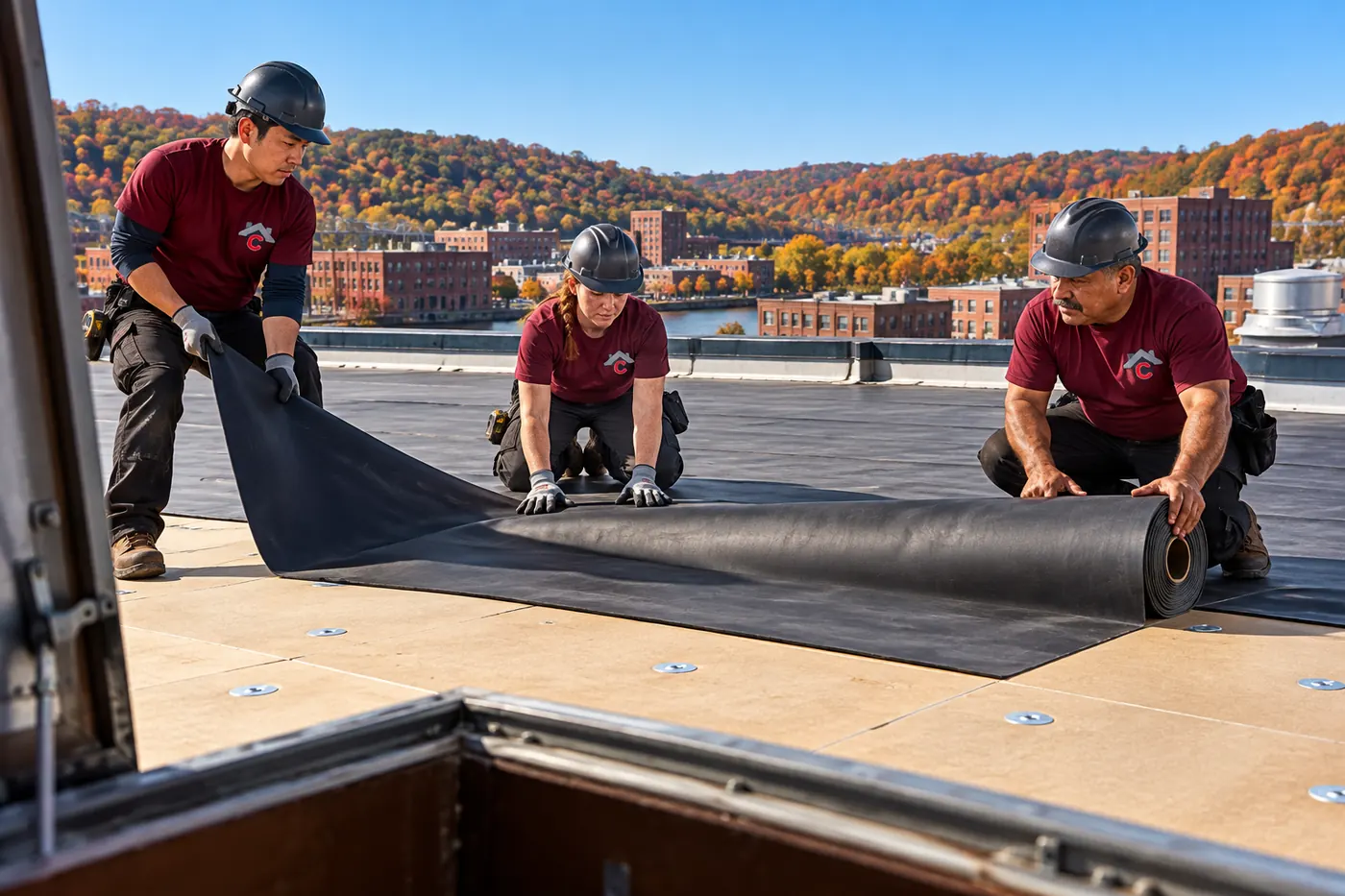
A Highland Heights roof replaced around its equipment stays dry longer.
Raised curbs keep flashing above the thicker new roof. Flashing at each curb ends well above the new surface.
Lines routed to drains stop standing water near units. Algae and soft spots around the units stop forming.
Walkway pads to every unit protect the field sheet. Service calls stop wearing paths through the sheet.
Abandoned curbs come out and get decked over. Every removed opening is one fewer leak to chase.
Equipment-heavy roofs here usually take one of these.
White welded sheet for cooled office and institutional space. Welded walkway pads lead to every unit on the roof.
TPO Roofing →Raised curbs and rated assemblies for roofs with heavy units. Curbs and supports come up to flashing height first.
Industrial Roofing →Re-flashed curbs on roofs with dry insulation. Re-flashing waits for the unit to be shut down safely.
Roof Repair →Rubber membrane for older wings and heated spaces. Older wings tie into the new roof at flashed joints.
EPDM Roofing →Call us. Curbs and condensate lines get checked first on unit-heavy roofs.
Equipment timing shapes the order of work.
We map every unit, curb, and condensate line, then check the field and drains. The unit list becomes the plan for curb work.
Disconnects and restarts get timed with your mechanical contractor. Restarts get checked with the mechanical contractor.
Campbell County building inspection is the single permit stop. The county reviews curb and unit changes with the roof.
Curbs come up, abandoned ones come out, and new membrane goes down. Abandoned openings get decked before insulation goes down.
Condensate goes to drains and walkway pads reach every unit. Pads get laid along the paths technicians use most.
Beyond Highland Heights, we take commercial roofing work in Covington and these towns.
Elsewhere near Highland Heights? Call us or send us a message.
Covington neighborhood shops and retail roofs.
Latonia Commercial Roofing →Hillside lots beside I-71/75.
Fort Wright Commercial Roofing →Industrial lots along the Licking River.
Wilder Commercial Roofing →Dixie Highway shops under wooded slopes.
Park Hills Commercial Roofing →Large retail and office roofs uphill.
Southgate Commercial Roofing →Historic district roofs and riverfront blocks.
Newport Commercial Roofing →Riverside buildings west of Covington.
Ludlow Commercial Roofing →Retail roofs on the US 27 corridor.
Cold Spring Commercial Roofing →Hilltop buildings in steady wind.
Fort Thomas Commercial Roofing →Attached storefronts with party walls.
Bellevue Commercial Roofing →Low Ohio River lots, Kentucky code.
Dayton Commercial Roofing →The Campbell County building inspection office reviews commercial roof work in Highland Heights, and the state sheet assigns the city to the county office only, making it the single permit stop for office, retail, or institutional roofs. Bring the unit list from your mechanical contractor to the first visit.
New insulation and taper raise the roof surface, so curbs that cleared the old roof sit too low to flash. Replacement is when they get raised. Curbs for planned units can be set at the same time.
Expect curb height checks, condensate lines routed to drains, walkway pads to every unit, HVAC disconnect timing, and abandoned curbs removed. Abandoned curbs come out during the same work.
Units shut down only for the hours their curbs are being flashed, and air intakes near adhesive work get closed to keep odors out. Restarts get checked before the crew leaves each day.
The scope lists roof area, layers, insulation, and every unit added, moved, or re-curbed so the county review covers the equipment work. A complete scope keeps the county review moving.
Yes, and it is the best time. Curbs for new units get set and flashed with the new membrane, so nothing gets cut into a finished roof later. Your mechanical contractor sets the units once the curbs are flashed.
Dead curbs and vents from old equipment come out, and the openings get decked over with matching steel or wood before insulation goes down. Every opening removed is one fewer flashing that can leak later.
Pads run from each hatch to every unit and around the service doors technicians open most. The layout gets marked on the roof plan so maintenance crews and the building staff know where to walk.
Send a unit count and the building address, and we will walk the roof.