Layers
One Worn Roof
Single worn membranes over dry insulation make good recover candidates.

As a Cold Spring commercial roofing contractor, we recover and replace retail and office roofs along the US 27 corridor, confirming the permit office first.
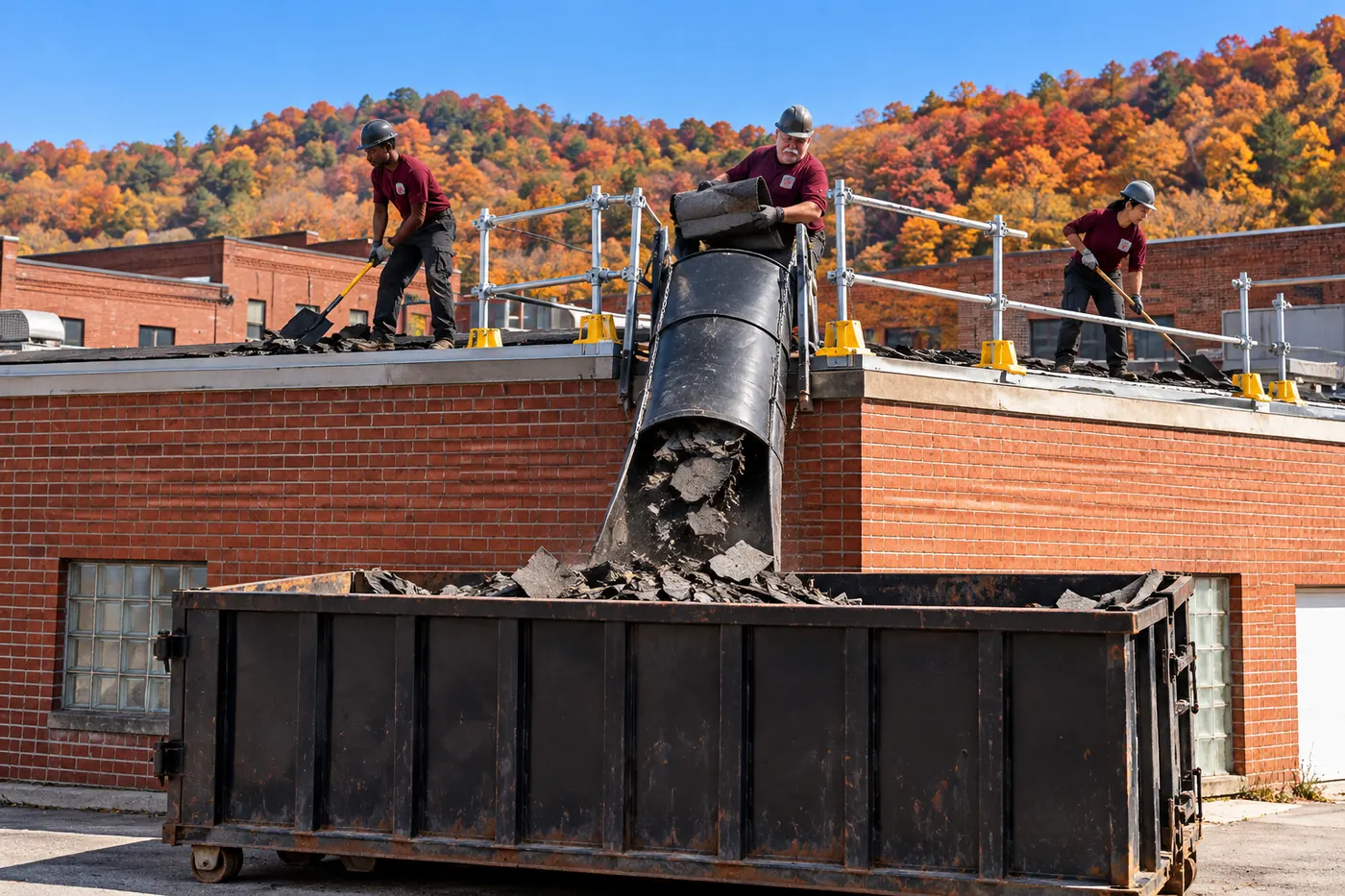
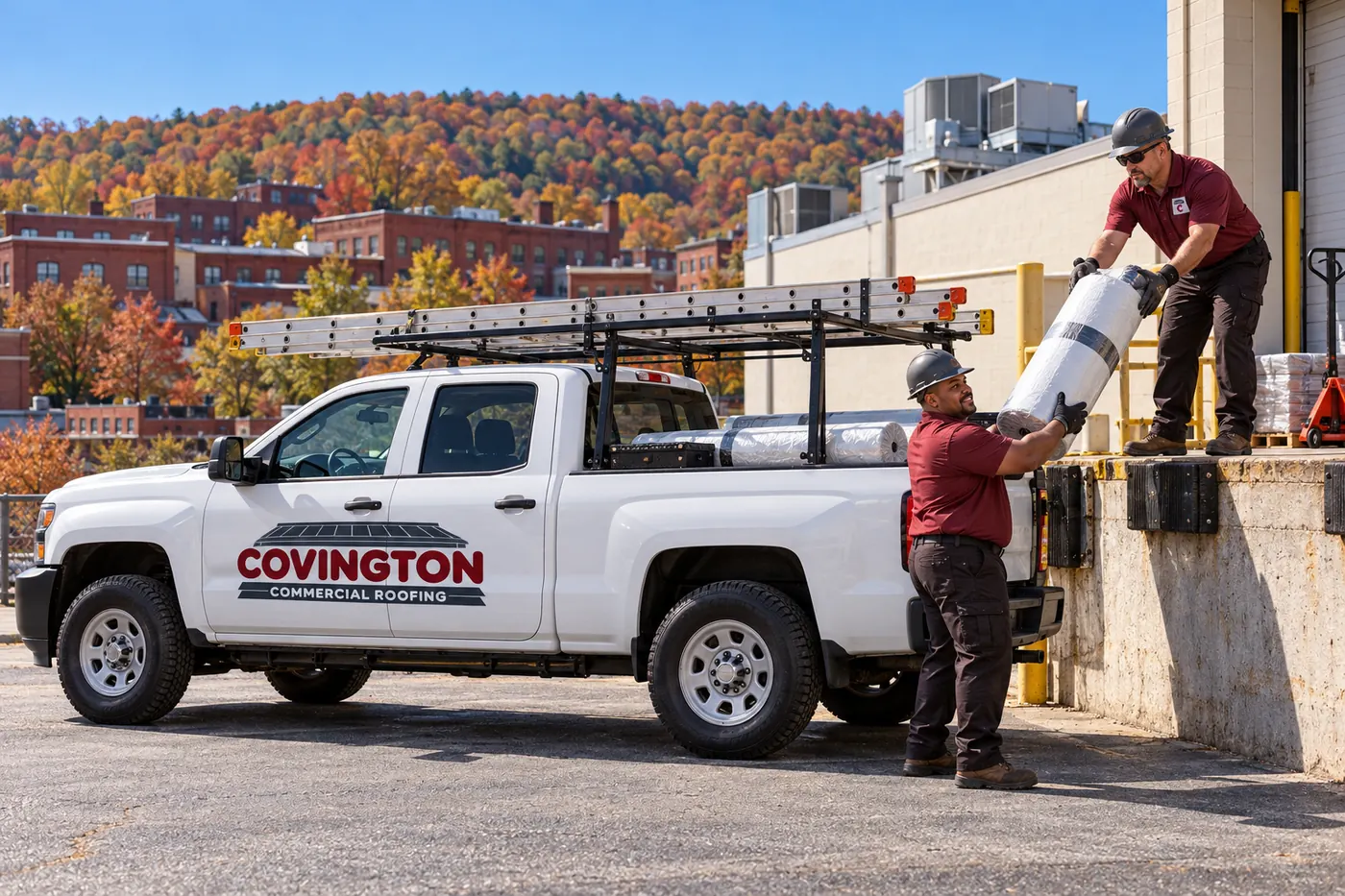
A Cold Spring commercial roofing contractor has an extra first step: Cold Spring is missing from the state’s Campbell County contact sheet, so the permit contact gets confirmed with city hall and the county office before materials are ordered.
Retail and office roofs along the US 27 corridor also need crane placement planned around busy roads.
Corridor retail roofs bring these conditions to inspection.
Single worn membranes over dry insulation make good recover candidates.
New tenants add units and curbs that never got crickets.
Undersized scuppers back water against parapets in hard rain.
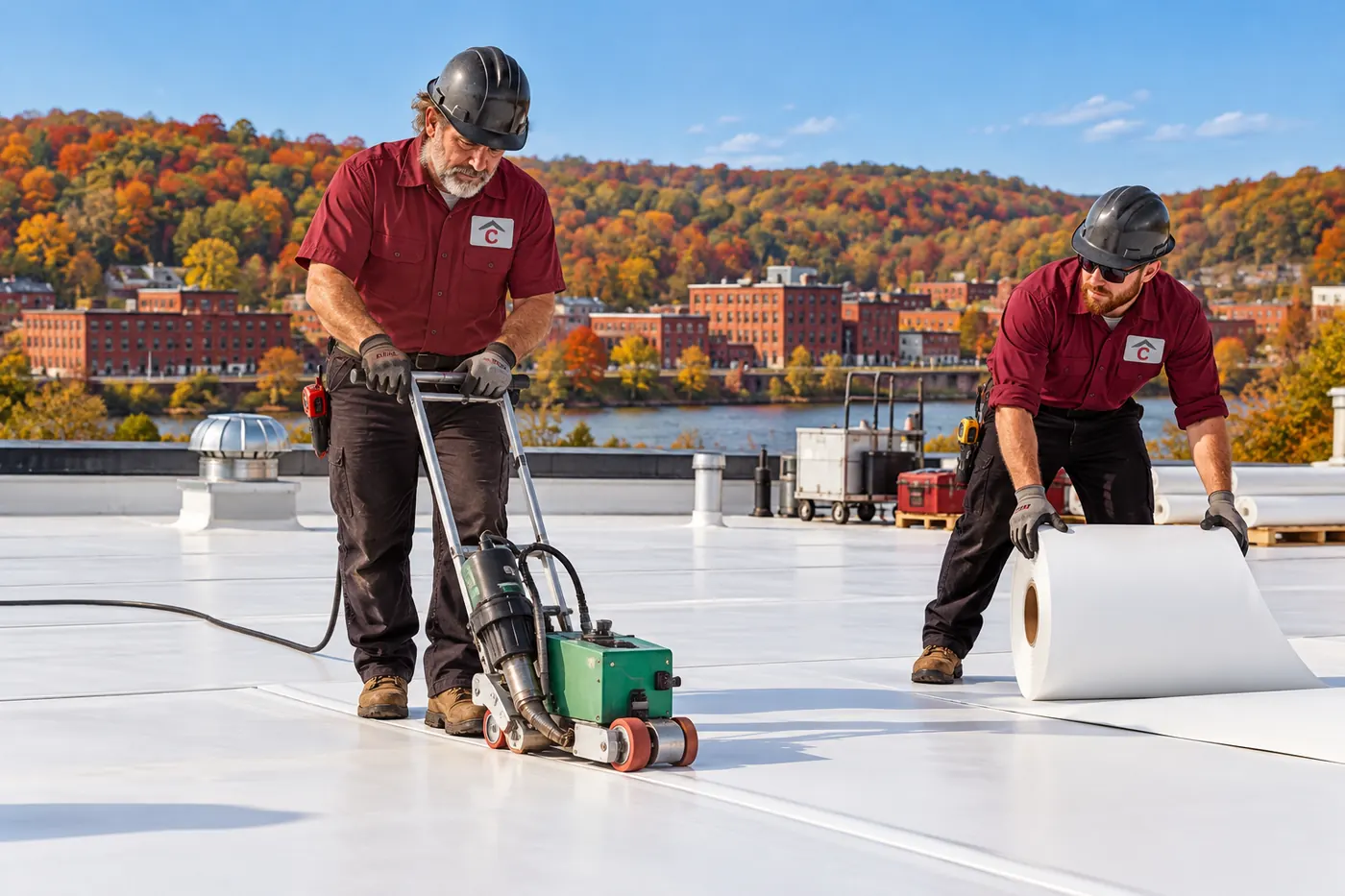
Aging membranes open across many laps on wide retail roofs.
Gravel stop on older retail roofs loosens at its joints and lifts in strong wind.

Rooftop sign brackets set without proper pitch pans leak where each leg meets the roof.
Cold Spring retail owners gain these from a well-scoped project.
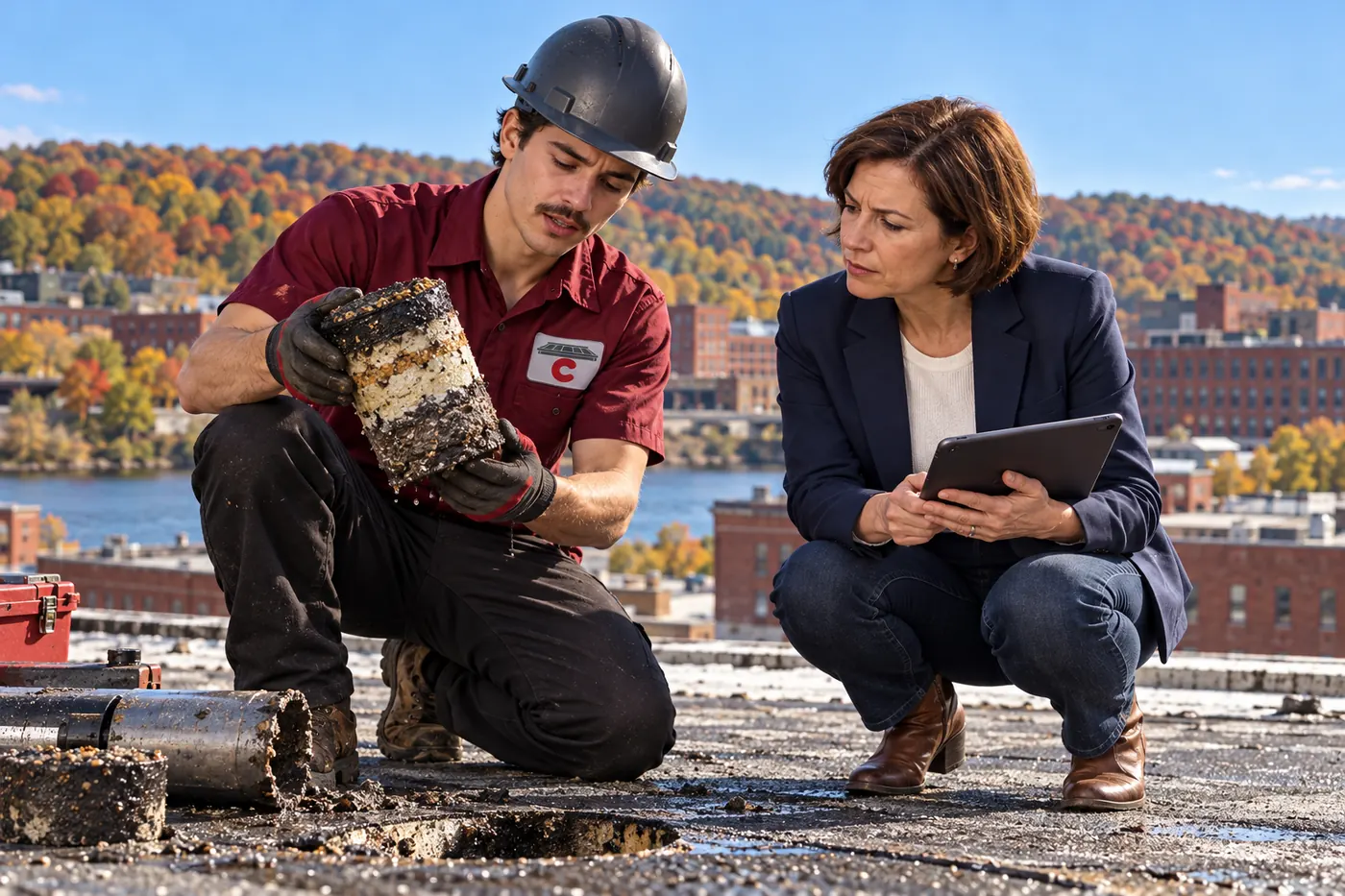
A core cut decides recover or tear-off before the scope is priced. Owners pay for the work the roof needs and nothing extra.
Taper splits water around curbs added by tenants. Water splits around each unit on its way to the drains.
Confirming the office early keeps material orders on time. Material orders wait on no surprise permit questions.
Crane spots picked away from busy corridor entrances. Shoppers reach the stores without detours around the crane.
Cold Spring retail and office roofs fit these.
One dry roof recovered with taper and new membrane. Wet spots found by scan get cut out before the board goes down.
Flat Roofing →Welded white membrane over cooled retail and offices. Welded laps stand up to service traffic on retail roofs.
TPO Roofing →Panels for pitched commercial buildings. Trim and closures go on at the spacing set by the maker.
Metal Roofing →Point repairs for roofs with dry insulation. Point repairs go in where the insulation is still dry.
Roof Repair →Call us. Confirming the Cold Spring permit contact is part of the first visit.
The permit check moves to the front on Cold Spring jobs.
We walk the roof, cut a core to count layers, and check units, drains, and scuppers. Core cuts get patched before the crew leaves.
Cold Spring city hall and the Campbell County office confirm who issues the permit. The answer gets noted in the scope for the record.
Tear-off or recover, membrane or panels, and every curb and drain get listed. Every sign support and unit is listed.
Crane and dumpster spots are picked away from US 27 entrances. Entrances stay open with clear signage around the work.
The roof goes on section by section, closed each evening. Tenants get notice before work moves over their space.
Beyond Cold Spring, we take commercial roofing work in Covington and these towns.
Elsewhere near Cold Spring? Call us or send us a message.
Covington neighborhood shops and retail roofs.
Latonia Commercial Roofing →Hillside lots beside I-71/75.
Fort Wright Commercial Roofing →Industrial lots along the Licking River.
Wilder Commercial Roofing →Dixie Highway shops under wooded slopes.
Park Hills Commercial Roofing →Large retail and office roofs uphill.
Southgate Commercial Roofing →Equipment-heavy office and institutional roofs.
Highland Heights Commercial Roofing →Historic district roofs and riverfront blocks.
Newport Commercial Roofing →Riverside buildings west of Covington.
Ludlow Commercial Roofing →Hilltop buildings in steady wind.
Fort Thomas Commercial Roofing →Attached storefronts with party walls.
Bellevue Commercial Roofing →Low Ohio River lots, Kentucky code.
Dayton Commercial Roofing →Cold Spring is missing from the state’s Campbell County contact sheet, so confirm the permit contact with Cold Spring city hall and the Campbell County building inspection office before ordering materials. Describe tear-off or recover, the new system, curbs and drains, and crane placement. Write down whoever confirms it, with the date, for the job file.
List tear-off or recover with the number of existing layers, the new membrane or panel type, curbs, drains, and scuppers being changed, and crane placement near busy roads. Missing items lead to questions that slow the review.
Cranes and dumpsters go where they keep customer entrances and corridor traffic clear, agreed with you during the first visit. Crane days get scheduled for slower shopping hours.
A single dry existing roof can take a recover board and new membrane. A core cut and moisture scan decide it. Wet spots found by scan get cut out first.
Sections over each tenant are torn off and closed the same evening, with notice before work moves over their space. Store managers get the dates in writing.
Sign brackets get pitch pans or flashed curbs on the new roof, filled and sealed during the install. Old supports that no longer carry a sign come out, and their openings get decked over.
Original drawings showing the deck and roof system, any past repair invoices, the roof’s age, and a sketch of where water shows inside all speed up the first visit and the layer count.
Yes, but each new unit needs a curb cut in and flashed into the finished membrane. Adding planned units during the replacement avoids cutting into the new roof later.
Send the property address, and we will confirm the permit office and walk the roof.