Silt
Clogged Leaders
Silt from high water packs downspout leaders and backs water up at the drains.
As a Dayton commercial roofing contractor, we replace roofs on warehouses and shops in Dayton, Kentucky, built to the Kentucky Building Code with drains checked for silt.
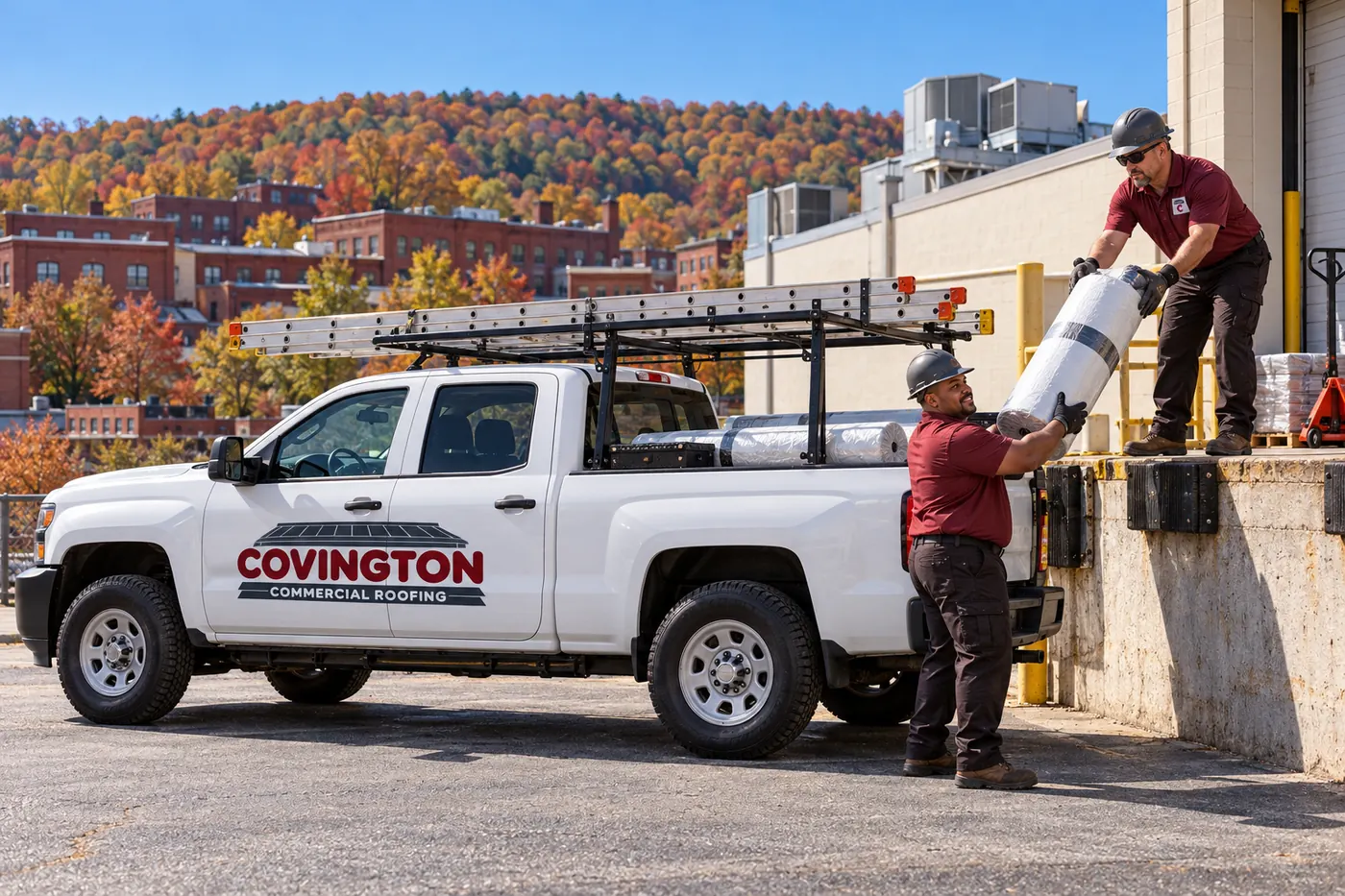

Hiring a Dayton commercial roofing contractor in Kentucky means Kentucky rules apply to every roof here, and permits go through the Campbell County building inspection office. Ohio’s Dayton is a separate city to the north under Ohio rules.
Online searches mix the two cities, so check that any code reference, supplier, or permit form says Kentucky. Reroofing details such as recover limits and edge metal follow the Kentucky Building Code.
Low lots along the Ohio River leave their mark on the roof.
Silt from high water packs downspout leaders and backs water up at the drains.
Low walls that stood in water show stained, soft base trim at the roof line.
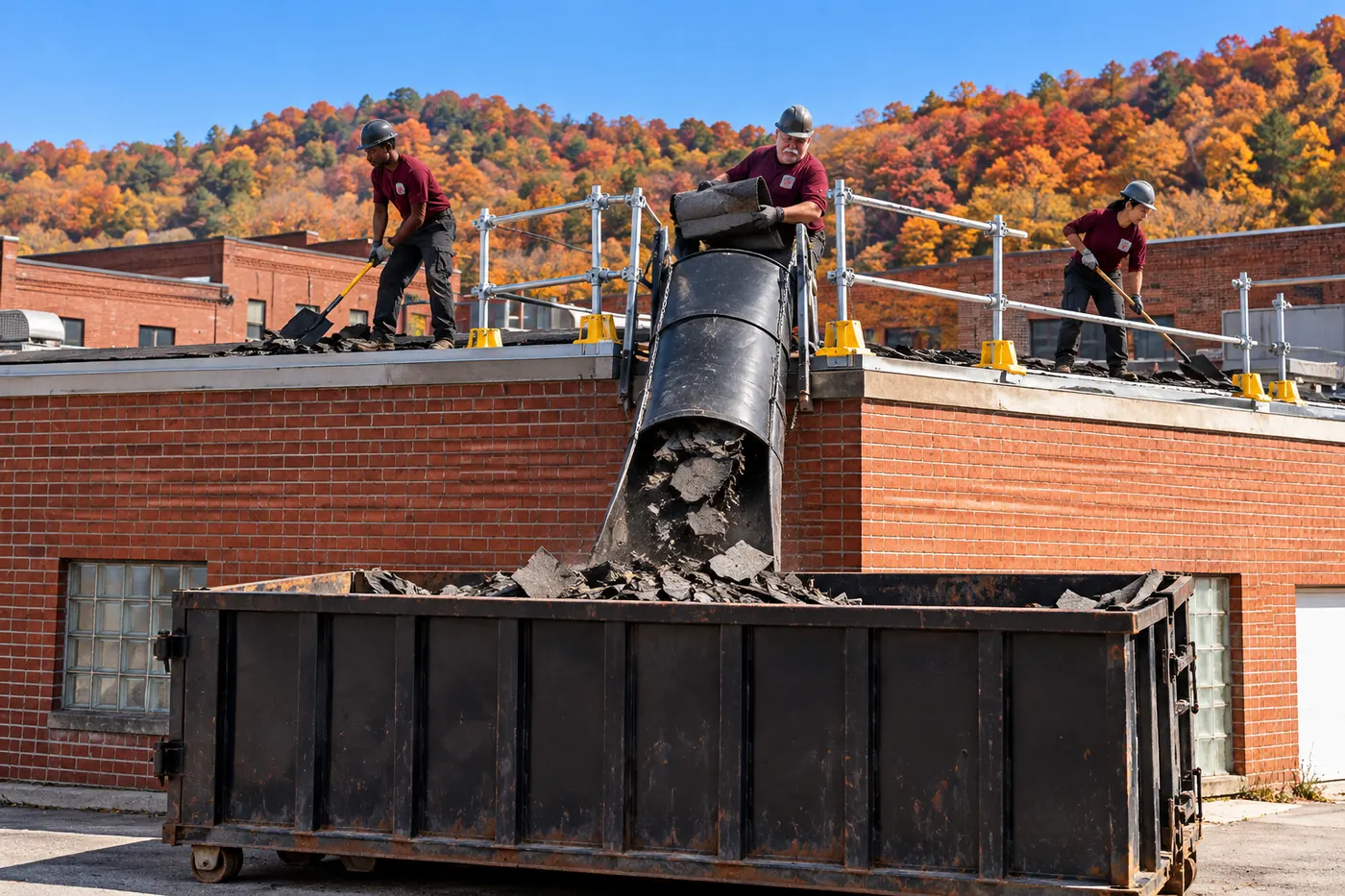
Older warehouses often carry a second roof, which rules out a third under Kentucky code.

Metal shop roofs rust first at the eaves where wet leaves sit in gutters.
Caps on low front parapets work loose and let rain into the wall above the shop door.
Old curbs sit flush with the roof after decades of added layers, leaving no room to flash.
Replacement on a Dayton building fixes drainage along with the membrane.
Leaders cleared of silt before new drain bodies go in keep water leaving the roof.
Tear-off removes old coverings so the new roof meets code and the deck gets seen.
Code references and permit forms stay Kentucky-only from first scope to final inspection.
New base flashing on low walls replaces trim that stood in water.
Dayton warehouses and shops mostly take one of these.
Welded white membrane for warehouses with offices or cooled space below. Cover board under the sheet stands up to forklift-height service traffic.
TPO Roofing →R-panel or standing seam replacement for shops with pitched roofs. Gutters get sized for the full slope draining into them.
Metal Roofing →Full tear-off with tapered insulation where water sat on a sagging deck. Every soft deck panel is replaced before taper goes down.
Flat Roofing →Sectioned replacement over production buildings that stay running. Each section closes watertight over the production floor.
Industrial Roofing →Call us. Leaders and drain bodies get checked before any roof work is priced.
River lots add a drainage check at the front of the job.
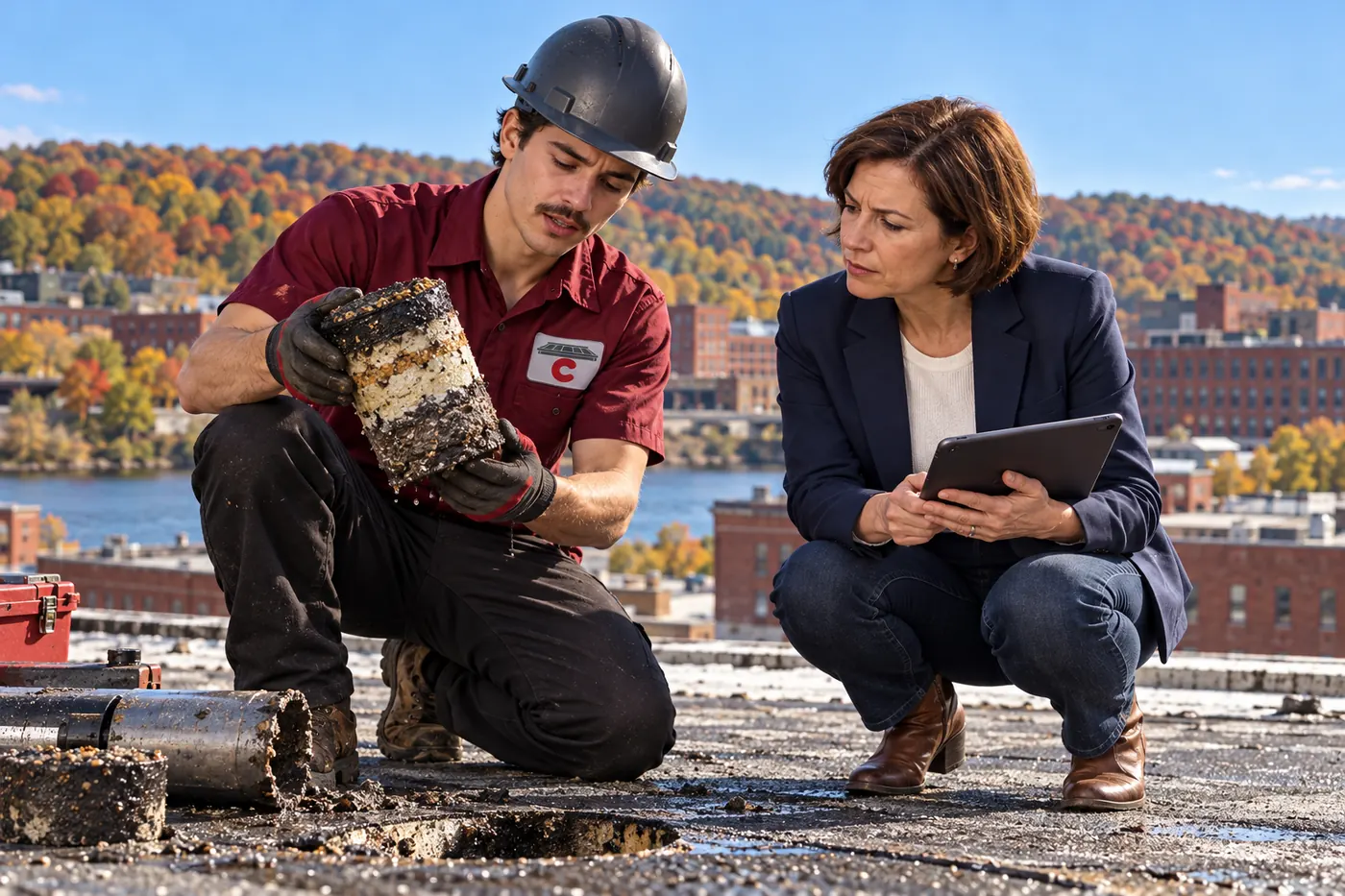
We walk the roof, count existing layers at a core cut, and look at walls where water stood. Core cuts get patched before the crew moves on.
Downspout leaders and storm lines get flushed of silt and checked before tie-ins. Leaders that will not clear get scoped for replacement.
The Campbell County building inspection office reviews the Kentucky scope. Code references stay on Kentucky editions throughout.
Old layers come off, soft deck is replaced, and new insulation and membrane go down. Rusted deck panels come out before new insulation.
New drain bodies, strainers, and base flashing finish the low points of the roof. Strainers get checked again after the first heavy rain.
Beyond Dayton, we take commercial roofing work in Covington and these towns.
Elsewhere near Dayton? Call us or send us a message.
Covington neighborhood shops and retail roofs.
Latonia Commercial Roofing →Hillside lots beside I-71/75.
Fort Wright Commercial Roofing →Industrial lots along the Licking River.
Wilder Commercial Roofing →Dixie Highway shops under wooded slopes.
Park Hills Commercial Roofing →Large retail and office roofs uphill.
Southgate Commercial Roofing →Equipment-heavy office and institutional roofs.
Highland Heights Commercial Roofing →Historic district roofs and riverfront blocks.
Newport Commercial Roofing →Riverside buildings west of Covington.
Ludlow Commercial Roofing →Retail roofs on the US 27 corridor.
Cold Spring Commercial Roofing →Hilltop buildings in steady wind.
Fort Thomas Commercial Roofing →Attached storefronts with party walls.
Bellevue Commercial Roofing →Kentucky code applies to every roof in Dayton, Kentucky, and permits go through the Campbell County building inspection office. Ohio’s Dayton is a separate city to the north, so check that code references, suppliers, and permit forms all say Kentucky.
Expect a core cut to count layers, a tear-off if two roofs are already on, deck repairs once the old roof is open, and drains and leaders checked for river silt before the new drain bodies are set.
Dayton sits along the Ohio River, and leaders on low lots fill with silt after high water. Clearing them first keeps the new roof from ponding at outlets that look new but cannot drain.
Kentucky’s reroofing rules bar a recover over a water-soaked roof or a building that already has two or more coverings. A core cut shows how many are there.
Rust at the eaves usually travels with full gutters. Gutter cleaning or replacement goes in the same scope as eave panel repairs so water stops sitting at the panel ends.
The Kentucky Building Code asks for edge securement on low-slope membrane roofs, so gravel stop and coping need tested designs. Suppliers listing Ohio products should confirm their edge metal meets the Kentucky edition named on the state’s enforced code list.
Yes. Crews open only the section they can close by evening, and poly goes over stock where the deck has gaps. Forklift lanes and loading docks stay clear by agreeing on the crane and dumpster spots before work starts.
Tell us about the building and the river lot, and we will set up the inspection.